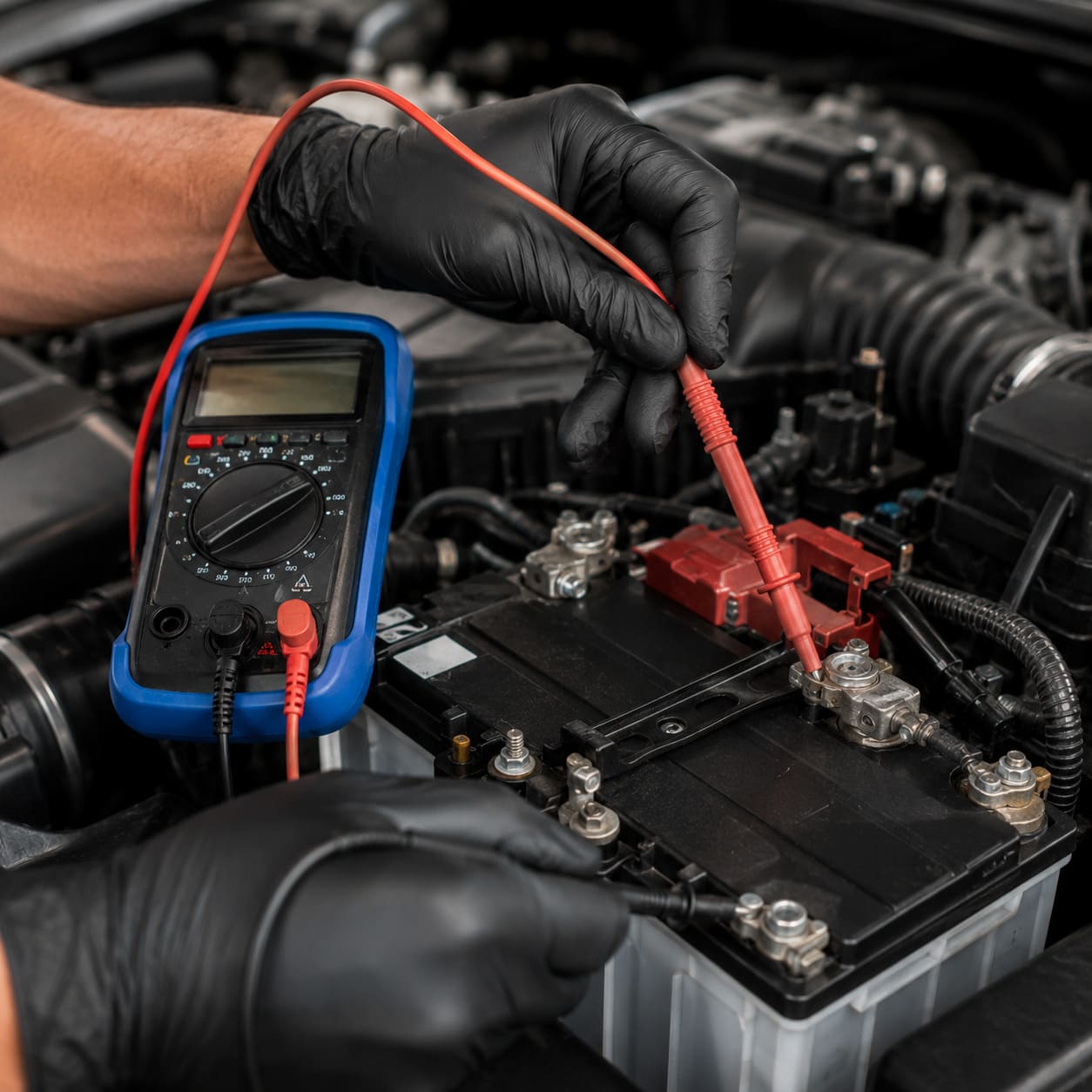
In South Florida, plan on about two to four years from a typical car battery, compared with five or more in northern states. Heat speeds up the chemical corrosion inside the battery and boils off its water, so the damage builds all summer and often shows up as a sudden no-start in the fall. Testing it every year after year two is the cheapest protection.
Most drivers assume cold kills batteries, because that is when they fail up north. The cold only exposes damage that heat already did. Battery testing firm Midtronics estimates a battery lasts about 55 months in cold regions but closer to 30 to 40 months in hot ones, and the industry rule of thumb is that every 15 degrees Fahrenheit of sustained operating temperature above 77 degrees cuts life roughly in half. Under the hood of a car parked in a Florida lot in July, 77 degrees is a distant memory.
Two things happen inside. The positive plate grids slowly corrode, and heat accelerates that reaction. In flooded batteries, heat also drives water out of the acid, which concentrates it and exposes the plates. Neither process makes noise or turns on a light. The battery keeps working through summer because warm batteries crank easily, and then a mild October morning or a week of sitting finally finds the weakness.
Symptoms
- Battery is three or more years old by its date code
- Cranking sounds a little slower than it used to, especially after the car sits in the sun
- White or blue crust building up on the terminals
- The battery case looks swollen or the sides bulge
- A start-stop system that stops shutting the engine off at lights
- The car needed a jump once, then seemed fine
Likely causes and what they cost
1. Heat-driven grid corrosion
$160-$280 installed for a flooded battery; $230-$400 for AGMThis is the main reason Florida batteries die young. The lead grid that carries current inside the positive plates corrodes faster at high temperature, reducing the battery's ability to deliver cranking amps. It is cumulative and cannot be reversed.
The fix: Replace the battery once it fails a load or conductance test. Choose the correct type and a fresh date code.
2. Electrolyte loss
under $5 for distilled water; replacement as aboveHeat evaporates water from the acid. In older serviceable batteries you can see low levels under the caps. In sealed batteries you cannot, but the effect is the same: less active plate area and a shorter life.
The fix: On batteries with removable caps, top up with distilled water only. Sealed batteries are replaced when they test weak.
3. Overcharging from a faulty regulator
$550-$1,100 for an alternatorA voltage regulator that lets the system run above about 15 volts cooks the battery from the inside. In heat the problem compounds. Signs include a sulfur smell, a hot or swollen case, and very bright lights at higher rpm.
The fix: Test charging voltage. Most cars have the regulator built into the alternator, so the alternator is replaced.
4. Wrong battery type for the car
$230-$400 for a correct AGM batteryCars with start-stop systems and heavy electrical loads are designed for AGM or enhanced flooded batteries. Installing a basic flooded battery to save money often leads to failure within a year or two, sooner in heat.
The fix: Replace with the type listed in the owner's manual or on the original battery label.
5. Long periods of sitting partly discharged
$40-$90 for a maintenance chargerA battery that sits below full charge forms hard sulfate crystals on its plates, and high temperatures speed up self-discharge, so a parked car loses charge faster in summer. Part-time cars suffer the most.
The fix: Keep it on a smart maintenance charger or have it driven regularly.
Costs are typical South Florida ranges for parts and labor, for budgeting only.
What you can check yourself
- 1Read the date code
Most batteries carry a sticker or stamp showing the month and year it was made or sold, such as 4/24 or a letter-number code where A is January. If it is more than three years old in South Florida, start testing it yearly.
- 2Look at the case
With the engine off and cool, check for bulging sides, cracks or wet spots. A swollen battery has overheated and should be replaced promptly. Wear gloves and eye protection, and do not lean over a battery that smells like rotten eggs.
- 3Clean the terminals
Remove the negative clamp first, scrub posts and clamps with a baking soda and water mix, rinse lightly, dry, and reconnect positive first. Coat the posts with a thin layer of terminal grease to slow future corrosion.
- 4Check the hold-down
The clamp or strap holding the battery should stop it moving at all. Vibration shortens battery life and a loose battery can short against the hood.
- 5Get a free test in late summer
August or September is the right time, because that is when a summer of heat has done its damage. Parts stores test for free and print the result.
When to take it to a shop
- The test shows the battery below about 70 percent of its rated cold-cranking amps
- The case is swollen, cracked or leaking
- Your car needs the battery registered or the battery management system reset after replacement
- The battery is in the trunk, under a seat or under the floor and you are not sure how to vent or reach it safely
- Charging voltage tests above about 15 volts
The Florida factor
Before a hurricane evacuation is the worst time to learn your battery is weak, because parts stores sell out of common sizes and traffic on I-95 north is bumper to bumper with the A/C working hard. If a storm is forecast and the battery is near three years old, test it early in the week. Keep a charged jump pack in the car through the season, June 1 to November 30.
Where you park matters more here than almost anywhere. A garage or covered spot keeps the engine bay tens of degrees cooler than open asphalt on a July afternoon, and a sunshade on the windshield helps the cabin but not the battery. Cars that live near the beach in Highland Beach or along A1A see more terminal corrosion from salt air, so clean and grease the posts at every oil change. Some brands sell batteries marketed for hot climates with thicker positive grids, which is a reasonable choice here as long as the size and type still match the car.
Notes for specific makes
- Toyota: Toyota and Lexus hybrids carry a small 12-volt battery that powers the computers at start-up. It lives in the cabin or trunk on many models, which keeps it cooler, but it is still a wear item, and its failure can look like a much bigger hybrid problem.
- Mercedes-Benz: Many Mercedes-Benz models use a second auxiliary battery to support start-stop and electronics. When it weakens the car shows an auxiliary battery warning, which is separate from the main battery and is a common Florida-age failure.
- BMW: BMW batteries are often in the trunk and are AGM on most recent models. Registering the replacement with a BMW-capable tool is part of the job, so budget for it if you do not do it yourself.
Battery & Electrical shops near Boca Raton
We are still adding shops for this service. Browse the directory or use the quote form.
See all shops for this serviceFrequently asked questions
Do batteries really die faster in Florida than up north?
Yes. Heat is harder on battery chemistry than cold. Estimates from battery testing companies put hot-climate life around 30 to 40 months, versus 55 or more in cold regions.
Is an AGM battery better in the heat?
AGM batteries are sealed and generally tolerate heat and deep cycling better than basic flooded ones, but they cost more. If your car came with AGM, you must replace it with AGM.
Should I replace my battery on a schedule?
Testing is smarter than a fixed schedule. Many owners in South Florida choose to replace proactively around year three or four if a test shows it weakening, rather than wait for a no-start.
Does the battery warranty help?
Free-replacement periods typically run two to three years, followed by a prorated period. Keep the receipt, because in Florida heat you may use it.
Related guides
More on this job: Battery & Electrical in Boca Raton, costs and how to choose a shop
- Midtronics: why hot temperatures reduce the lifespan of batteries
- Car Care Council: summer heat takes a toll on your car's battery
- RepairPal: battery replacement cost estimate
General information, not a diagnosis. A car problem can have causes a guide cannot see, so have anything safety-related inspected in person. Read our editorial policy.