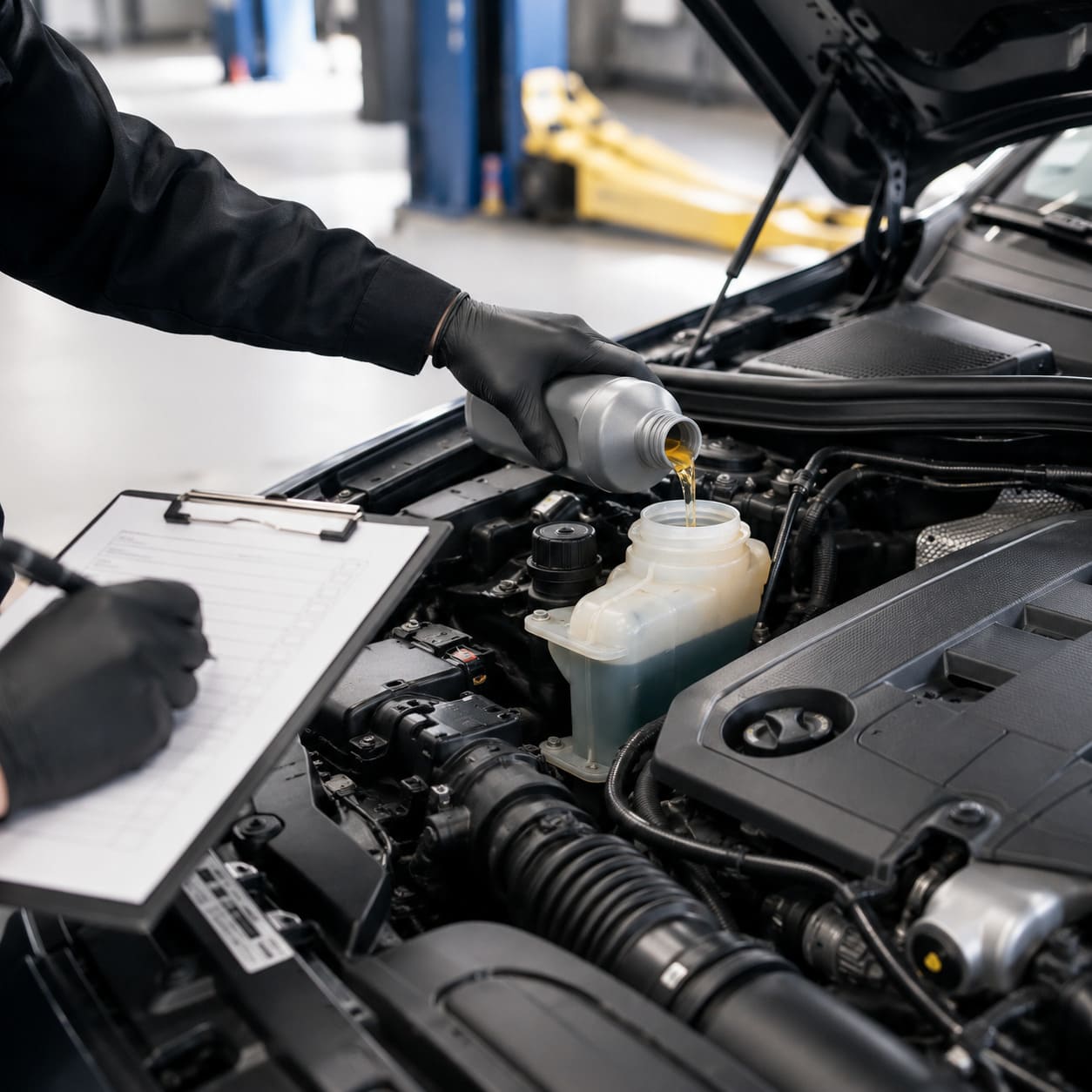
Most modern cars need an oil and filter change every 5,000-10,000 miles, filters and brake fluid around 30,000, spark plugs and some fluids between 60,000 and 100,000, and a timing belt only if the engine has one. Your owner's manual is the authority, and in South Florida the severe-service column usually fits better than the normal one.
Carmakers publish two schedules in the owner's manual or maintenance booklet: normal and severe. The severe list shortens oil, filter and fluid intervals for cars that do short trips, crawl in hot stop-and-go traffic, tow, or drive on dusty roads. Kia's current manuals, for example, list heavy traffic above 90 degrees Fahrenheit and frequent stop-and-go driving as severe conditions, and recommend the severe schedule for every car after 10 years or 100,000 miles.
The milestones below are a realistic composite for gasoline cars built in the last 15 years. Your exact intervals depend on the engine, so match each item against your own book before paying for it. Many cars now run an electronic oil-life monitor that calculates the interval from how you drive, which is fine to follow as long as you also respect the time limit, usually 12 months.
Treat a shop's 30k/60k/90k package as a menu, not a requirement. Ask which items appear in the manufacturer schedule for your car and which are the shop's own additions.
Symptoms
- Oil-life or service reminder showing on the dash
- You cannot remember the last oil change, or it was more than 12 months ago
- Odometer just crossed 30,000, 60,000, 90,000 or 100,000 miles
- A shop quoted a large milestone package and you are not sure what is required
- You bought a used car with no service records
- The car sits for months while you are out of state
Likely causes and what they cost
1. Every 5,000-10,000 miles: oil, filter and tire rotation
$70-$130 synthetic oil change; rotation $25-$50 or includedThis applies to every combustion engine, every year. Oil carries heat out of the engine and breaks down faster in sustained high temperatures, so the interval shrinks under severe use. Rotating tires at the same visit evens out tread wear and gives someone a chance to look at the brakes.
The fix: Drain and refill with the oil grade printed on the cap or in the manual, new filter, rotate tires, set pressures, quick look at brakes, belts, hoses and wiper blades.
2. Around 15,000-30,000 miles: air filters and inspections
$60-$150 for both filters installed; under $50 in parts if you do it yourselfThe engine air filter and the cabin air filter clog with dust, pollen and debris. A blocked cabin filter in a humid climate also holds moisture and smells. Most schedules also call for a closer brake, suspension and exhaust inspection at this point.
The fix: Replace the engine air filter and cabin filter, inspect brake pad thickness, rotors, steering linkage, CV boots and exhaust hangers.
3. Around 30,000-45,000 miles: brake fluid
$100-$180Brake fluid absorbs water from the air over time, which lowers its boiling point and corrodes ABS parts from the inside. Many European makes and Honda list it by time, every two to three years, regardless of mileage. Humid air speeds the process.
The fix: Flush the old fluid through each caliper with the correct DOT-rated fluid, and bleed the ABS unit where the manual requires it.
4. Around 60,000-100,000 miles: spark plugs, transmission and coolant
Plugs $150-$350 on a 4-cylinder, $300-$700 on a V6 with a hard-to-reach rear bank; transmission fluid $150-$400; coolant $120-$250Iridium and platinum plugs last a long time but do wear, and worn plugs cause misfires that can damage a catalytic converter. Automatic and CVT fluid schedules vary widely, from 30,000 miles to never-inspect-only, and heat is the main enemy of transmission fluid. Long-life coolant usually gets its first change near 100,000 miles, then shorter intervals after that.
The fix: Replace plugs, drain and refill or exchange transmission fluid with the exact spec fluid, drain and refill coolant with the correct type, inspect drive belts.
5. Around 90,000-105,000 miles: timing belt, if your engine has one
$700-$1,500 with water pump on most 4-cylinder and V6 enginesMost new engines use a timing chain that is meant to last the life of the engine, but plenty of popular engines still use a rubber belt. If a belt snaps on an interference engine, valves hit pistons and the repair can exceed the value of the car. The manual will list a belt interval only if your engine has one.
The fix: Replace the timing belt, tensioner and idlers, and usually the water pump while everything is apart, since the labor overlaps.
6. Past 100,000 miles: suspension, mounts and the second round of fluids
$500-$1,200 for a pair of struts installed; belt $120-$250High-mileage cars start to need wear items that no schedule lists by mileage: shocks and struts, engine mounts, serpentine belts, and hoses. At this point the manufacturer schedule usually repeats, and the severe column is the safer one to follow.
The fix: Inspect and replace worn struts, mounts, belts and hoses as found, and keep repeating the fluid intervals.
Costs are typical South Florida ranges for parts and labor, for budgeting only.
What you can check yourself
- 1Find your real schedule
Open the maintenance section of the owner's manual or the manufacturer's owner website, enter your VIN, and note whether your engine has a timing belt or chain. Write the next due items on a card in the glove box.
- 2Decide which column you belong in
Read the manual's definition of severe service. Daily trips under 5 miles, long idles in traffic, and summer heat usually qualify. If two or more apply most weeks, use the severe intervals.
- 3Check oil level and color
With the engine off for 10 minutes on level ground, pull the dipstick, wipe it, reinsert and read it. Oil below the low mark or black and gritty means you are overdue. Some newer cars have no dipstick and show the level in the dash menu.
- 4Look at the brake fluid reservoir
The plastic tank near the driver's side firewall has min and max lines. Fluid that is dark amber or brown rather than light gold is old. Do not open it with dirty hands, and wash off any spill on paint immediately.
- 5Read the tire date code
The last four digits of the DOT code on the sidewall are week and year of manufacture. Tires older than about six years deserve a close look even if the tread is fine.
- 6Pull your records together
Gather receipts or ask a previous shop for history by VIN. A shop can often pull service history, and records make warranty claims and resale easier.
When to take it to a shop
- Any interval involving brake fluid, timing belts, spark plugs on a V6, or transmission fluid on a sealed unit
- The oil light or a maintenance-required light stays on after a service
- You bought a used car with unknown history and need a baseline inspection
- A shop recommends a flush or service you cannot find in your manual and you want a second opinion
The Florida factor
Boca Raton driving checks most boxes on the severe list. A 15-minute crawl on Glades Road at 4 p.m. in August means long idling with the A/C on full and the engine bay heat-soaked, followed by parking on asphalt that reads well above 120 degrees. Oil, transmission fluid and batteries all age faster under that pattern, so a 10,000-mile oil interval that is fine in Ohio is optimistic here for a car that mostly does short local errands.
Seasonal residents face the opposite problem. A car that sits from May to November at a condo in Highland Beach may only cover 3,000 miles a year, yet the oil still oxidizes and absorbs moisture in the humid air, tires flat-spot, and the battery drains. Follow the time-based limit, usually once a year for oil, and have the battery tested when you return. Rodents and wasps also nest in air boxes on cars that sit, so the engine air filter is worth a look before the first drive.
Heat also shortens the life of rubber. Wiper blades often crack within a year in direct sun, and the cabin filter collects pollen and mold spores fast during the rainy season. Budget for both every year rather than at a fixed mileage.
Notes for specific makes
- Honda: Most Hondas use the Maintenance Minder, which shows a letter (A for oil, B for oil plus inspection) and numbers 1-7 for sub-items such as tire rotation, air filters, transmission fluid and spark plugs. Follow the codes rather than a generic mileage chart, and ask the shop which number triggered each item.
- Toyota: Recent Toyotas specify thin 0W-16 or 0W-20 oil with 10,000-mile intervals under normal use. Using the correct thin grade matters for fuel economy and the variable valve timing system. Most current Toyota engines use timing chains, so there is no belt interval.
- BMW: BMW uses Condition Based Service, which can stretch oil intervals well past 10,000 miles. Many independent BMW specialists suggest roughly half that interval for cars driven in heat and traffic, given how often these engines develop oil leaks and timing chain issues when oil is neglected.
- Mercedes-Benz: Mercedes alternates Service A and Service B, roughly every 10,000 miles or once a year. Brake fluid is listed every two years by time. A large share of the cost is the dealer labor rate, and both services are routine work an independent shop with the correct oil approvals can do.
- Subaru: Subaru's severe schedule covers short trips and extreme heat, and halves the oil interval to around 3,750 miles on older models. Check CVT fluid condition during inspections even where the manual lists it as inspect-only.
Routine Maintenance shops near Boca Raton
- Boca Auto Fix4301 Oak Circle, Boca Raton, FL, 33431
- Element, Pickup trucks and trailer repair3120D Northwest 16th Terrace, Pompano Beach, FL, 33064
- Europen Auto Service CentreParkland, FL
- Ferrari of Boca Raton6403 W Rogers Cir, Boca Raton, FL, 33487
- FirestonePompano Beach, FL
- Firestone1259 North Federal Highway, Boca Raton, FL, 33432
Frequently asked questions
Do I have to use the dealer to keep my warranty?
No. Federal law lets you have routine maintenance done anywhere, or do it yourself, without voiding the factory warranty. Keep receipts showing the date, mileage and the oil spec used.
Is the 3,000-mile oil change still necessary?
Not for most cars built in the last 20 years with synthetic oil. Severe-service intervals today are usually 5,000 miles or so. The 3,000-mile rule mostly survives in shop window stickers.
Are the 30k, 60k and 90k packages a rip-off?
They are not always a rip-off, but they often bundle extras like fuel system cleaning or engine flushes that your manual does not list. Ask for the package broken into line items and compare each one to your schedule.
What if I have no idea what was done before I bought the car?
Assume nothing was done. Change the oil, both air filters and brake fluid, inspect the coolant and transmission fluid, and find out whether the engine has a timing belt. That baseline usually costs a few hundred dollars and resets the clock.
Should I follow the oil-life monitor or the sticker?
The monitor, as long as it was reset at the last change and you also respect the 12-month limit. The sticker usually reflects the shop's habit rather than your car's algorithm.
Related guides
More on this job: Routine Maintenance in Boca Raton, costs and how to choose a shop
- Kia owner's manual: scheduled maintenance and severe usage conditions
- FuelEconomy.gov: keeping your vehicle in shape
- FTC: auto warranties and auto service contracts
General information, not a diagnosis. A car problem can have causes a guide cannot see, so have anything safety-related inspected in person. Read our editorial policy.