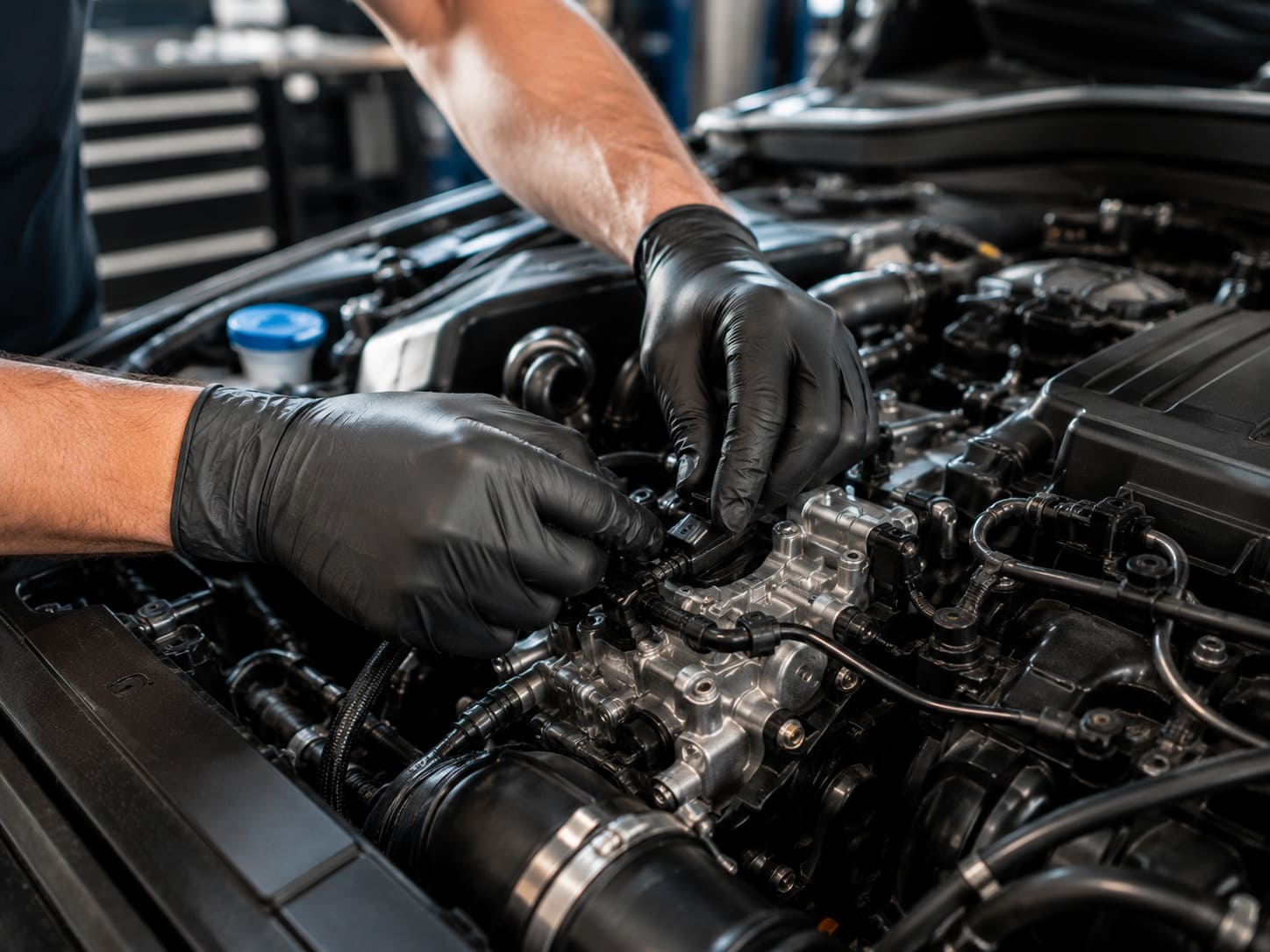
A sharp squeal for a few seconds right after startup is almost always the serpentine belt slipping on a pulley, either because the belt is worn, the automatic tensioner has weakened, or the belt is wet. A new belt is one of the cheaper repairs on a car, usually $120-$250. Do not ignore it for long, because that one belt often drives the alternator, water pump, A/C and power steering.
Most cars built since the 1990s use a single long, ribbed serpentine belt that snakes around every engine accessory. A spring-loaded tensioner keeps it tight. When the belt cannot grip a pulley well enough to turn it, the rubber slips across the metal and screams. Startup is when the load is highest: the alternator is recharging the battery after cranking, and cold rubber is stiffer.
A squeal and a chirp are not quite the same. A long, sustained squeal usually means slip, from a worn belt, low tension, or something on the belt such as oil, coolant or water. A short, repeating chirp more often points to a pulley that is slightly out of line or a tensioner that is bouncing. Knowing which one you hear helps the shop skip straight to the right part.
Belt wear has also changed. Older neoprene belts cracked visibly, and the old rule was to replace a belt with several cracks in a few inches. Modern EPDM belts resist cracking and wear more like a tire, losing rubber from the ribs while still looking fine to the eye, which is why a belt can squeal without showing a single crack.
Symptoms
- A loud, high-pitched squeal for 2 to 10 seconds after a cold start
- Squealing that returns when the A/C compressor engages
- Squealing when turning the steering wheel to full lock
- Chirping that repeats in a steady rhythm at idle
- Squeal that is worse on rainy or humid mornings
- Visible shiny, cracked or frayed belt surface
- Battery light or heavy steering after the noise
Likely causes and what they cost
1. Worn or glazed serpentine belt
$120-$250As the ribs lose material they sit deeper in the pulley grooves and lose the wedging grip that transmits power. The surface also glazes to a hard shine. The belt then slips under the startup load, especially on the alternator pulley.
The fix: Replace the belt, and check the tensioner and idler pulleys while the belt is off.
2. Weak automatic belt tensioner
$250-$450 with the beltThe tensioner's internal spring weakens and its damper wears with age. A stretched belt also pushes the tensioner arm toward the end of its travel, where it applies less force. Fitting a new belt to a tired tensioner often brings the squeal back within months.
The fix: Replace the tensioner assembly, usually together with the belt.
3. Moisture on the belt
free, or $120-$250 for a beltWater between the ribs and the pulleys acts like a lubricant. On a worn belt that has lost its groove clearance, water cannot escape and the belt can briefly hydroplane on the pulleys, which shows up as squealing on wet or very humid mornings that stops once things dry.
The fix: If it happens only in wet weather and the belt is young, no repair is needed. If the belt is older, replacing it usually ends the wet-weather squeal.
4. Failing idler or tensioner pulley bearing
$150-$350Smooth idler pulleys guide the belt around the engine. When their bearings dry out, they drag, chirp or growl, and a seized pulley will make the belt squeal constantly and wear quickly.
The fix: Replace the noisy pulley. They are often sold as part of a belt kit.
5. Oil or coolant on the belt
$120-$250 for the belt plus the cost of the leak repairA leaking valve cover, front crank seal, power steering line or water pump can coat the belt. Contaminated rubber swells and slips no matter how new it is.
The fix: Repair the leak first, then fit a new belt. Cleaning a soaked belt rarely works.
6. Seizing accessory: alternator, A/C compressor or power steering pump
$500-$1,000 for an alternator; $500-$900 for a power steering pump; $1,000-$2,000 for an A/C compressorIf an accessory bearing is failing, it takes more force to turn that pulley, and the belt slips over it. An A/C compressor clutch that drags can squeal only when the A/C is switched on.
The fix: Replace the failing component.
Costs are typical South Florida ranges for parts and labor, for budgeting only.
What you can check yourself
- 1Look at the belt with the engine off
Turn the engine off and remove the key or fob from the car so nobody can start it. With a flashlight, look along the ribbed side of the belt for cracks across the ribs, missing chunks, fraying edges, a hard glassy shine, or oil. Run a gloved finger along it: ribs that feel rounded and shallow rather than sharp are worn.
- 2Find the belt routing diagram
Most cars have a sticker under the hood showing how the belt is routed and where the tensioner is. Locate the tensioner, usually a pulley on a spring-loaded arm, so you know what to watch.
- 3Try a careful water spray test
With the engine idling and squealing, stand well to the side and spray a short mist of water from a spray bottle onto the ribbed side of the belt. Keep hands, sleeves, hair and jewelry far from the belt and fan. If the noise stops for a moment, the belt is dry, glazed or slightly misaligned. If it gets louder, tension is low and the tensioner is the likely culprit.
- 4Watch the tensioner arm
While the engine idles, look at the tensioner arm from a safe distance. A little movement is normal. An arm that jumps or flutters constantly, or that sits at the very end of its marked travel range, points to a weak tensioner or a stretched belt.
- 5Test with loads switched on
From the driver's seat with the car in Park, switch on the A/C, then the headlights and rear defroster, then turn the steering wheel. Note which one makes the squeal start or get worse. That tells the shop whether to look first at the compressor, the alternator or the power steering pump.
When to take it to a shop
- The squeal lasts more than a few seconds or is present all the time.
- The battery warning light comes on, or the temperature gauge rises, after the noise.
- The belt is soaked in oil or coolant.
- You hear a growl or grind from a pulley, not just a squeal.
- The belt keeps coming off or wearing along one edge, which suggests a misaligned pulley.
The Florida factor
The wet-weather version of this squeal is a local specialty. Overnight dew coats everything under the hood for much of the year, and summer afternoon storms soak the engine bay on the drive home. A belt that is getting near the end of its life will often squeal only on those wet starts for weeks before it starts doing it on dry days, so a squeal that appears every morning in rainy season is an early warning, not a quirk.
Florida also works the belt harder than most climates. The A/C compressor runs nearly year-round here, and on many cars it is the heaviest load on the belt. Combine that with under-hood heat that ages rubber and tensioner dampers, and belts on Boca cars commonly need replacing sooner than the 60,000 to 100,000 miles many owners expect.
For cars kept near the beach in Highland Beach or along A1A, salty air corrodes pulley surfaces and leaves rust on the grooves of a car that sits for a season. The first few starts after a long summer away can squeal until the belt polishes that surface rust off. If it does not stop after a few drives, the belt has been damaged and should be replaced.
Engine Repair shops near Boca Raton
We are still adding shops for this service. Browse the directory or use the quote form.
See all shops for this serviceFrequently asked questions
Can I just spray belt dressing on it?
Belt dressing can quiet a squeal for a few days, but it leaves a sticky film that attracts dirt and can make some belts slip more later. Most belt makers advise against it. If the belt squeals, it is telling you something needs replacing or adjusting.
How long does a serpentine belt last?
Many manufacturers list inspection or replacement between 60,000 and 100,000 miles, but heat, A/C use and age matter as much as mileage. Have it checked by gauge or measurement at every major service rather than relying on looks.
What happens if the belt breaks while I'm driving?
On most cars you lose the alternator, water pump and power steering at once. The battery warning light comes on, steering gets heavy, and the engine can overheat within minutes. Pull over safely and shut the engine off.
Is the squeal maybe the starter or the brakes?
A starter usually whines or grinds only while the engine is cranking, then stops. Brake squeal happens while the car is moving and usually changes when you press the pedal. A squeal right after the engine catches, while parked, is nearly always the belt drive.
Should I replace the tensioner with the belt?
If the car has more than about 80,000 miles on its original tensioner, or the water spray test pointed to low tension, it is usually worth doing both at once to avoid paying labor twice.
Related guides
More on this job: Engine Repair in Boca Raton, costs and how to choose a shop
- Gates Tech Tip TT002-15: Belt inspection changes for EPDM belts
- RepairPal: Serpentine belt replacement cost
General information, not a diagnosis. A car problem can have causes a guide cannot see, so have anything safety-related inspected in person. Read our editorial policy.