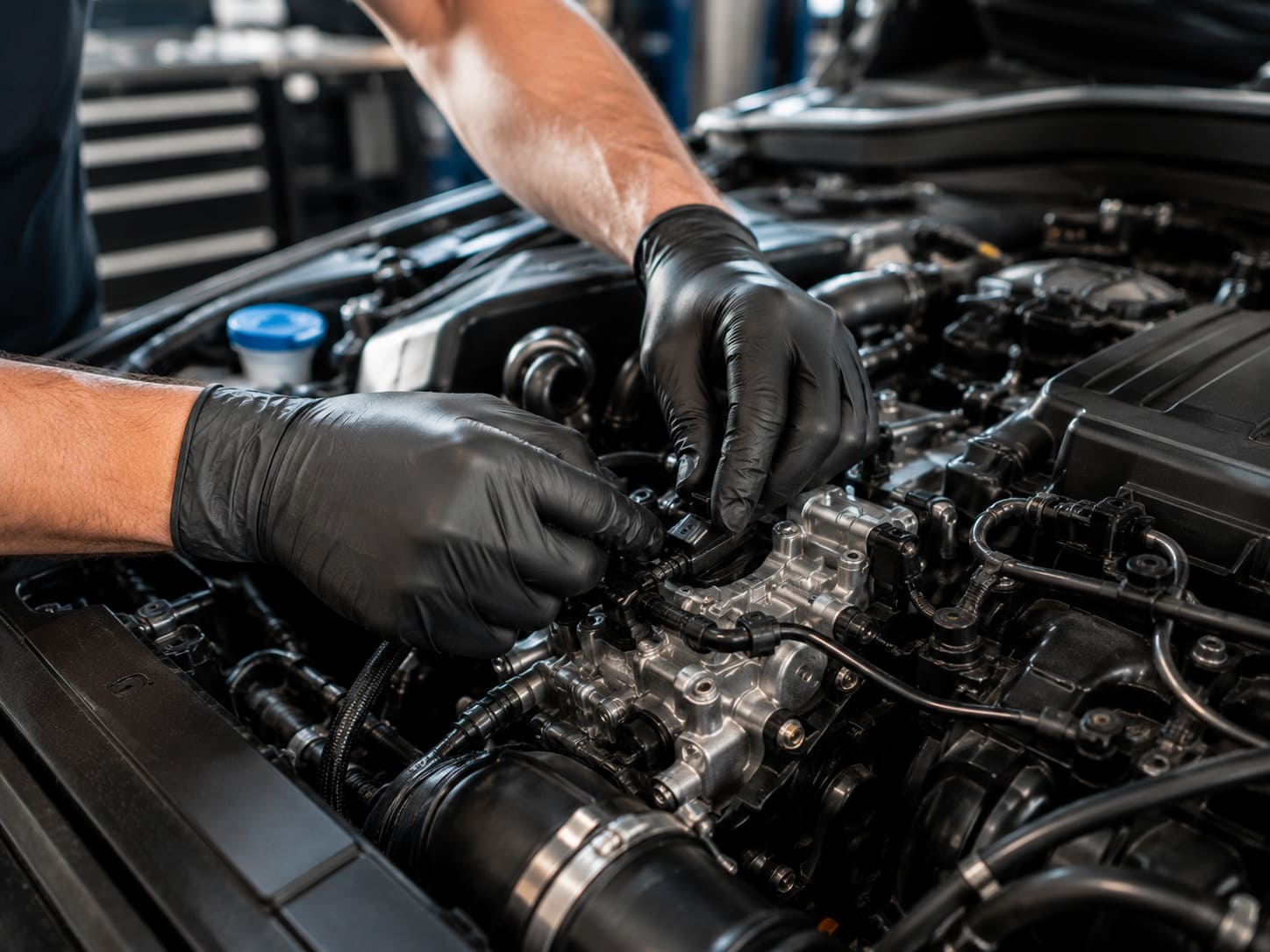
Dark brown or black drips under the front half of the car are almost always engine oil, and the most common sources are a loose drain plug or filter, a hardened valve cover gasket, or a leaking oil pan gasket. A few drops a day is a slow seep you can plan around, while a puddle the size of a dinner plate overnight needs attention this week. The key is to keep the dipstick above the low mark while you get it fixed.
Motor oil starts out amber and turns brown to black with use. It feels slick between your fingers and smells like, well, used oil, not sweet like coolant or like fish oil the way some transmission fluids do. If you are not sure which fluid you are looking at, the color guide linked below is a faster first step than this one.
Where the drip lands tells you a lot. Oil that lands right behind the front bumper on a front-engine car usually comes from the front of the engine, such as the timing cover or front crankshaft seal. A spot directly below the engine is usually the oil pan, the drain plug or the filter. A spot near the middle of the car, where the engine meets the transmission, suggests a rear main seal. Oil on top of the engine runs downhill and can drip from a lower point, so the spot shows where oil falls, not always where it starts.
Leaks rarely fix themselves. Gaskets harden over time and the seep becomes a drip. The repair cost depends far more on how much has to come apart to reach the seal than on the price of the gasket itself.
Symptoms
- Brown or black spots on the driveway or garage floor under the engine
- A burning oil smell after driving, sometimes with light smoke from under the hood
- Oil level dropping between changes
- Wet, grimy residue on the engine or on the underside splash shield
- Oil spots that appeared right after an oil change
- Dark streaks running down the back of the engine toward the transmission
Likely causes and what they cost
1. Loose drain plug, missing washer or poorly seated filter
$20-$80; $150-$400 if the pan threads are stripped and need a repair insertIf the spots started within a few days of an oil change, this is the first place to look. A reused crush washer, a double-stacked filter gasket or a plug that was not tightened properly lets oil seep out each time the engine is warm.
The fix: Replace the drain plug washer, seat the filter correctly, or replace a stripped drain plug.
2. Valve cover gasket
$350-$700 on most engines; more where the intake manifold must come offThe valve cover sits on top of the engine and its rubber gasket hardens with years of heat. Oil seeps out along the edges and runs down the side of the block. Often it drips onto the exhaust manifold first, which is the source of most burning-oil smells.
The fix: Remove the valve cover, clean the sealing surfaces, and install a new gasket and spark plug tube seals where fitted.
3. Oil pan gasket
$550-$1,000The oil pan bolts to the bottom of the engine and holds most of the oil. Its gasket or sealant bead can weaken with age, and pans can also be dented or cracked by curbs, debris or speed bumps.
The fix: Drain the oil, remove the pan, clean both surfaces and reseal. Some vehicles need the front subframe lowered to get the pan out.
4. Oil filter housing or oil cooler gasket
$300-$900; up to $1,200 on some European enginesMany modern engines use a cast or plastic oil filter housing with an oil cooler attached. The gaskets between them and the block are a known weak spot, and on V engines the housing may sit in the valley under the intake, where leaks run down the back of the block.
The fix: Replace the housing gaskets, or the whole housing if it is plastic and cracked.
5. Front crankshaft seal or timing cover
$300-$700 for the seal; $800-$2,500 to reseal a timing coverThe front crank seal sits behind the main pulley, and the timing cover seals around the timing chain. Leaks here coat the front of the engine and the pulleys, and oil on the belt can make it squeal.
The fix: Replace the front seal, or remove and reseal the timing cover, which is a much bigger job on some engines.
6. Rear main seal
$900-$2,500This seal sits where the crankshaft exits the back of the engine. A leak shows up as oil dripping from the joint between the engine and transmission. It is usually a slow seep on high-mileage engines.
The fix: The transmission must come out to reach the seal. Many owners add a clutch or flywheel inspection while it is apart on manual cars.
Costs are typical South Florida ranges for parts and labor, for budgeting only.
What you can check yourself
- 1Do the cardboard test
Slide a large flattened cardboard box under the engine and front half of the car overnight, on a level surface. In the morning, note the size, color and position of any spots relative to the front wheels. Take a photo with a tape measure in the frame. This one picture saves diagnostic time.
- 2Check the dipstick and log it
With the engine off on level ground for a few minutes, read the dipstick. Note how far below full it is, and check again after a week. Losing less than half a quart a month is a seep. Losing a quart a week is a leak that needs prompt repair.
- 3Look at the drain plug and filter with a flashlight
Without crawling under the car, shine a flashlight under the front from the side. Fresh, wet oil on the drain plug or around the oil filter right after a service points back to that service. Never get under a car supported only by a jack. If you need to go under, use rated jack stands on solid ground, or a pair of drive-on ramps.
- 4Inspect the top of the engine
With the engine cool, open the hood and look along the edges of the valve cover, around the oil filler cap and near the oil filter housing. Wet, dark, dust-caked edges show where oil is escaping. Avoid touching the exhaust manifold, which stays dangerously hot long after the engine is shut off.
- 5Clean it and watch it return
If the engine is grimy everywhere, a shop may clean it and add UV dye to the oil, then check after a short drive. That is the reliable way to tell an old, dried leak from an active one.
When to take it to a shop
- Oil is dripping on the exhaust and you smell burning, or you see smoke from under the hood.
- You need to add more than a quart between scheduled changes.
- The leak is fast enough to leave a puddle overnight.
- Oil has soaked the serpentine belt, engine mounts or wiring.
- The oil pressure light has come on, even briefly.
The Florida factor
Condo and HOA rules make oil leaks a bigger nuisance in Boca than in many places. Many associations prohibit vehicles that leak in shared garages or on paver driveways, and oil soaks into concrete pavers and travertine quickly in the heat. A drip tray or a piece of cardboard under the car while you wait for a repair can save you a warning letter and a pressure-cleaning bill.
The climate speeds up the hardening of gaskets. Engines here run through thousands of full heat cycles a year, many of them sitting in 95 F traffic with the A/C running, and rubber seals lose their flexibility faster than in cooler places. A ten-year-old Florida car with its original valve cover gasket is more likely to seep than the same car from a northern state.
Afternoon downpours also carry leaked oil off driveways and parking lots into storm drains, which in Palm Beach County drain toward canals and the Intracoastal Waterway. A slow leak is a small environmental problem multiplied by every car on the street, and it is one more reason not to let a seep become a drip.
Notes for specific makes
- BMW: Many BMW 6-cylinder engines are known for oil filter housing gasket and valve cover gasket leaks, often by 60,000 to 100,000 miles. A filter housing leak can drip onto the serpentine belt, which can damage the belt and in some cases has led to the belt being pulled into the engine through the front seal.
- Jeep: The 3.6L Pentastar V6 in Wrangler, Grand Cherokee and other models uses a plastic oil filter housing with an integrated oil cooler, mounted under the intake manifold. Leaks from it are common and run down the back of the engine, so they are often mistaken for a rear main seal leak. Replacement housings, including all-metal versions, are widely available.
- Dodge: Dodge and Chrysler vehicles with the same 3.6L Pentastar V6, such as the Charger, Durango and Pacifica, share the oil filter housing leak. Ask the shop to confirm the source with dye before replacing a rear main seal.
Engine Repair shops near Boca Raton
We are still adding shops for this service. Browse the directory or use the quote form.
See all shops for this serviceFrequently asked questions
Is it safe to drive with an oil leak?
Usually yes, if the leak is slow and you keep the oil level up. The real risks are running the engine low on oil and oil dripping onto hot exhaust parts, which can cause smoke and, rarely, a fire.
Do stop-leak additives work for oil leaks?
Seal conditioners can swell hardened rubber seals slightly and slow a minor seep, particularly on older engines. They will not fix a cracked pan, a loose drain plug or a torn gasket. Use them only as a stopgap.
Why did the leak start right after my oil change?
The most likely reasons are a reused drain plug washer, a filter that was not seated, a double gasket on the filter, or a filler cap left loose. Go back to the shop that did the change and ask them to check it, which most will do free.
How do I get oil stains off pavers?
Blot fresh oil with cat litter or an absorbent, then use a degreaser made for concrete or pavers. Old, set-in stains usually need a poultice or a professional cleaner. Fixing the leak first matters, or the stain just comes back.
Why does the shop want to clean the engine before diagnosing?
Oil travels with gravity and airflow, so an old leak can coat half the engine. Cleaning it and adding UV dye shows exactly where fresh oil is coming from, which prevents replacing the wrong gasket.
Related guides
More on this job: Engine Repair in Boca Raton, costs and how to choose a shop
General information, not a diagnosis. A car problem can have causes a guide cannot see, so have anything safety-related inspected in person. Read our editorial policy.