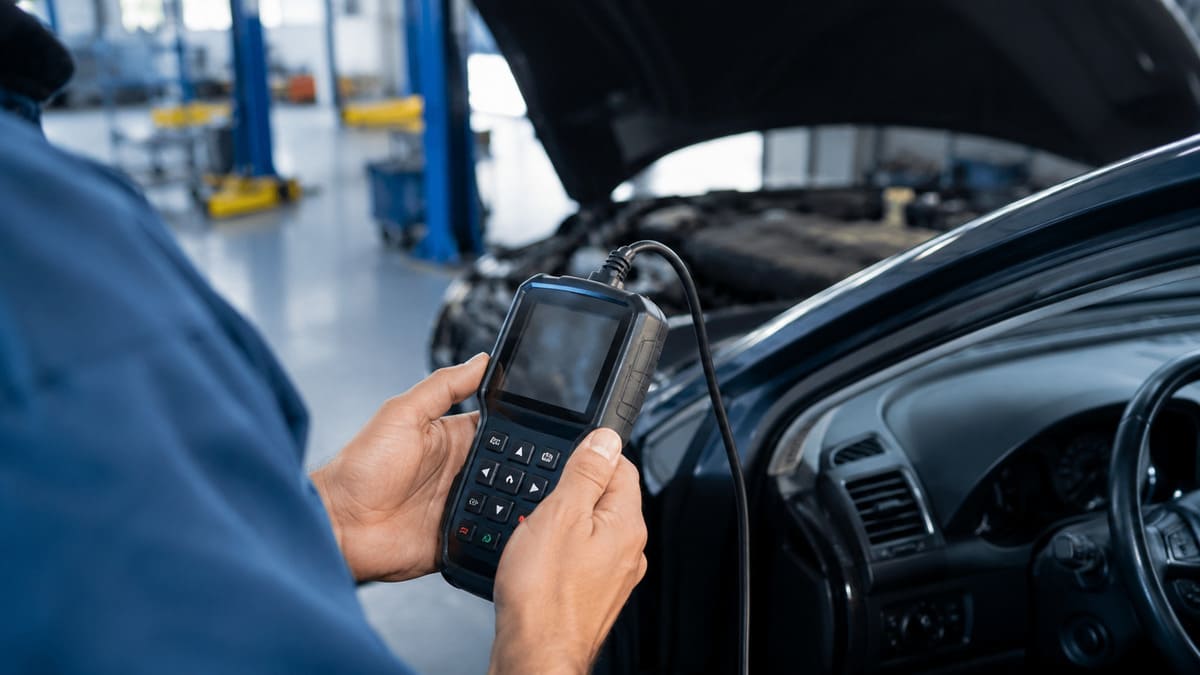
The exact kind of burning smell tells you a lot: acrid oil usually means a leak dripping onto the hot exhaust, sharp melting plastic points to an electrical short or debris on the exhaust, a hot metallic smell at one wheel is a dragging brake, and burnt rubber is often a slipping belt. Any burning smell with smoke, or a plastic smell from the dash, means pull over and shut the car off now.
Cars have plenty of parts that run hot enough to scorch whatever touches them. Exhaust manifolds and catalytic converters run hundreds of degrees above the boiling point of water, brake rotors heat up fast under hard stops, and electrical wires get hot when they carry more current than they were sized for. A burning smell means something is meeting one of those hot surfaces that should not be, or a part is generating heat it should not.
Before you assume the worst, think about timing. A faint smell for the first few drives on a new car, after an oil change where a little oil spilled, or after new brake pads is usually burn-off and fades within 50 to 100 miles. A smell that is new on an older car, keeps coming back, or is getting stronger is a real symptom. A rotten egg smell from the exhaust is a different problem with its own guide.
Symptoms
- Acrid oily smell after driving, strongest when you stop
- Sharp electrical or melting plastic smell from vents or dash
- Hot, metallic smell near one wheel after normal driving
- Burnt rubber smell with a squeal at startup
- Thin smoke from under the hood at a red light
- Smell only when the heater or A/C fan is on high
Likely causes and what they cost
1. Oil leaking onto the exhaust
$200-$600 for most valve cover or filter housing gaskets, more on V6 and V8 enginesValve cover gaskets, oil filter housings and oil pan seals sit right above or near the exhaust manifold. Drips hit the hot metal and cook off with a sharp, smoky smell, often strongest when you stop and the air stops moving. Spilled oil from a recent oil change produces the same smell for a day or two.
The fix: Clean the engine, locate the leak and replace the failed gasket or seal.
2. Dragging brake caliper or parking brake left on
$250-$650 per axleA caliper with a seized piston or sticky slide pins keeps the pad pressed against the rotor. The wheel gets very hot, gives off an acrid metallic smell, and the car may pull to one side. Driving with the parking brake partly set does the same thing at the rear.
The fix: Free or replace the caliper, lubricate the slide pins and usually replace the overheated pads and rotor.
3. Electrical short or overheating component
$150-$600, more if a module or harness must be replacedA wire with damaged insulation, a failing blower motor resistor, or an aftermarket accessory wired without a proper fuse can overheat. The smell is sharp and chemical, like hot plastic, and may come through the vents. Flickering lights, a dead accessory or a blown fuse often appear at the same time.
The fix: Trace the overheating circuit, repair the wiring or replace the failed component. Do not keep replacing a fuse that keeps blowing.
4. Slipping or damaged drive belt
$120-$300 for a belt, $250-$550 with a tensioner or idler pulleyThe serpentine belt runs the alternator, A/C compressor and often the water pump. A belt that is glazed, oil-soaked, or rubbing on a seized pulley heats up and smells like burnt rubber, usually with a squeal on startup or when the A/C kicks on.
The fix: Replace the belt, and the tensioner or pulley if one is binding.
5. Debris on the exhaust or under the hood
free to $150, chewed wiring repair $200-$1,000Plastic bags, palm frond fibers, leaves and rodent nesting material collect on heat shields and the top of the engine. They smolder with a smoky or melting plastic smell, and can ignite if left there.
The fix: Remove the debris with the engine cold, check for chewed wires if animals nested there.
6. Coolant leaking onto hot parts
$150-$400 for hoses, $800-$1,800 for a heater coreCoolant dripping onto the exhaust or engine gives a sweet, steamy burning smell, sometimes with white vapor from under the hood. A leaking heater core sends the smell into the cabin and can fog the windshield.
The fix: Pressure-test the cooling system and replace the leaking hose, housing or heater core.
7. Overheated clutch
$1,100-$2,200 for a clutch replacementOn manual cars, slipping the clutch on a steep ramp or riding the pedal in traffic overheats the friction material, which smells like burning paper. Occasional smells are normal for a learner, but frequent ones mean the clutch is wearing out.
The fix: Change driving habits, or replace the clutch kit if it slips.
Costs are typical South Florida ranges for parts and labor, for budgeting only.
What you can check yourself
- 1Pull over and check for smoke
If you see smoke from under the hood or smell burning plastic in the cabin, turn the engine off, get out and move away from the car. Call 911 if you see flames. Do not open the hood if there is heavy smoke, because fresh air can feed a fire.
- 2Feel near each wheel, without touching
After a normal drive, hold your hand a few inches from each wheel. One that radiates much more heat than the others, or a wheel you can smell, points to a dragging brake. Do not touch the wheel or rotor.
- 3Look for oil around the engine, once it cools
With the engine off and cool, use a flashlight to look for wet, dark oil on the valve cover edges, filter housing and exhaust manifold area. Check the dipstick level too.
- 4Inspect the belt and the top of the engine
Engine off and key out. Look for leaves, plastic or nesting material on the engine and around the exhaust heat shields. Check the belt for cracks, shiny glazing or oil.
- 5Test the fan speeds
If the smell appears only on certain blower speeds or only when the fan is on, the blower motor or its resistor may be overheating. Turn the fan off and note whether the smell fades.
- 6Check the parking brake
Make sure the parking brake is fully released. On electronic brakes, look for a warning light or message.
When to take it to a shop
- Any electrical or melting plastic smell, especially from the dash, with flickering lights or failing accessories. Electrical fires spread fast.
- Smoke from the engine bay or a wheel.
- One wheel is much hotter than the others or the car pulls to one side.
- The smell keeps coming back after the engine is cleaned, which means an ongoing leak.
- The vehicle has an open recall for fire risk. Check the VIN on NHTSA's recall lookup.
The Florida factor
South Florida produces some burning smells you rarely get up north. Dried palm frond fibers, Spanish moss and plastic grocery bags blown around in storms end up wedged on exhaust heat shields. Iguanas, rats and squirrels climb into engine bays of cars parked near landscaping and leave nesting material or chew wiring, especially on cars that sit while their owners spend the summer away. A smoky smell on the first drive back in the fall is worth a look under the hood before you go far.
Humidity and salt air are hard on brakes. Caliper slide pins corrode, and calipers stick, on cars that sit or live near the coast along A1A. Combine a sticking caliper with stop-and-go driving on Palmetto Park Road and the wheel can get hot enough to smell after a few miles. Summer heat also stresses wiring: a car parked in direct sun at 95 degrees can have under-dash temperatures far higher than that, which is hard on any aftermarket remote start, dash cam or stereo wiring that was spliced in without proper fuses.
Notes for specific makes
- Hyundai: In 2023 Hyundai and Kia recalled about 3.37 million U.S. vehicles because brake fluid can leak inside the ABS or hydraulic control module and cause an electrical short and engine compartment fire, even when parked. Affected Hyundai models span roughly 2011 to 2015. Owners were told to park outside until repaired.
- Kia: Kia's part of the same 2023 recall covers many 2010 to 2017 models, including Optima, Sorento, Soul, Sportage and Forte. A burning smell on one of these cars is a reason to check the VIN for an open recall first.
- BMW: BMW valve cover and oil filter housing gaskets commonly leak onto the exhaust manifold on six-cylinder engines, which is a classic source of burning oil smell and light smoke at stoplights.
- Volvo: Many Volvo models of the 2000s and early 2010s are prone to PCV system clogs that raise crankcase pressure and push oil out past seals, which then burns on the exhaust.
Diagnostics shops near Boca Raton
- Ferrari of Boca Raton6403 W Rogers Cir, Boca Raton, FL, 33487
- Tire Kingdom23193 Sandalfoot Plaza Drive, Boca Raton, FL, 33428
Frequently asked questions
Is a burning smell after an oil change normal?
A light smell for the first drive or two often is, because a little oil spilled on the engine during the change. If it lasts more than a couple of days, check that the filter and drain plug are not leaking.
Why does my car smell like burning when the heater or A/C is on?
Dust burning off a heater core that has not been used in months, which is common in Florida, fades quickly. A sharp plastic smell that stays usually means a failing blower motor or resistor. A sweet smell means coolant from the heater core.
Can a burning smell mean my car is about to catch fire?
It can, which is why smoke, electrical smells and fuel smells are treated as stop-now situations. Most burning smells are oil on the exhaust or hot brakes, but neither should be ignored.
My new brakes smell like they are burning. Is that a problem?
New pads and rotors release a resin smell during the first 100 or so miles as they bed in. If the smell comes from one wheel only, or the wheel is much hotter than the others, have the installer check for a sticking caliper.
Related guides
More on this job: Diagnostics in Boca Raton, costs and how to choose a shop
- AAA: Why does my car smell like burning rubber?
- Cars.com: What's causing that smell in my car?
- NBC News: Kia and Hyundai recall more than 3 million U.S. vehicles over fire risks
General information, not a diagnosis. A car problem can have causes a guide cannot see, so have anything safety-related inspected in person. Read our editorial policy.