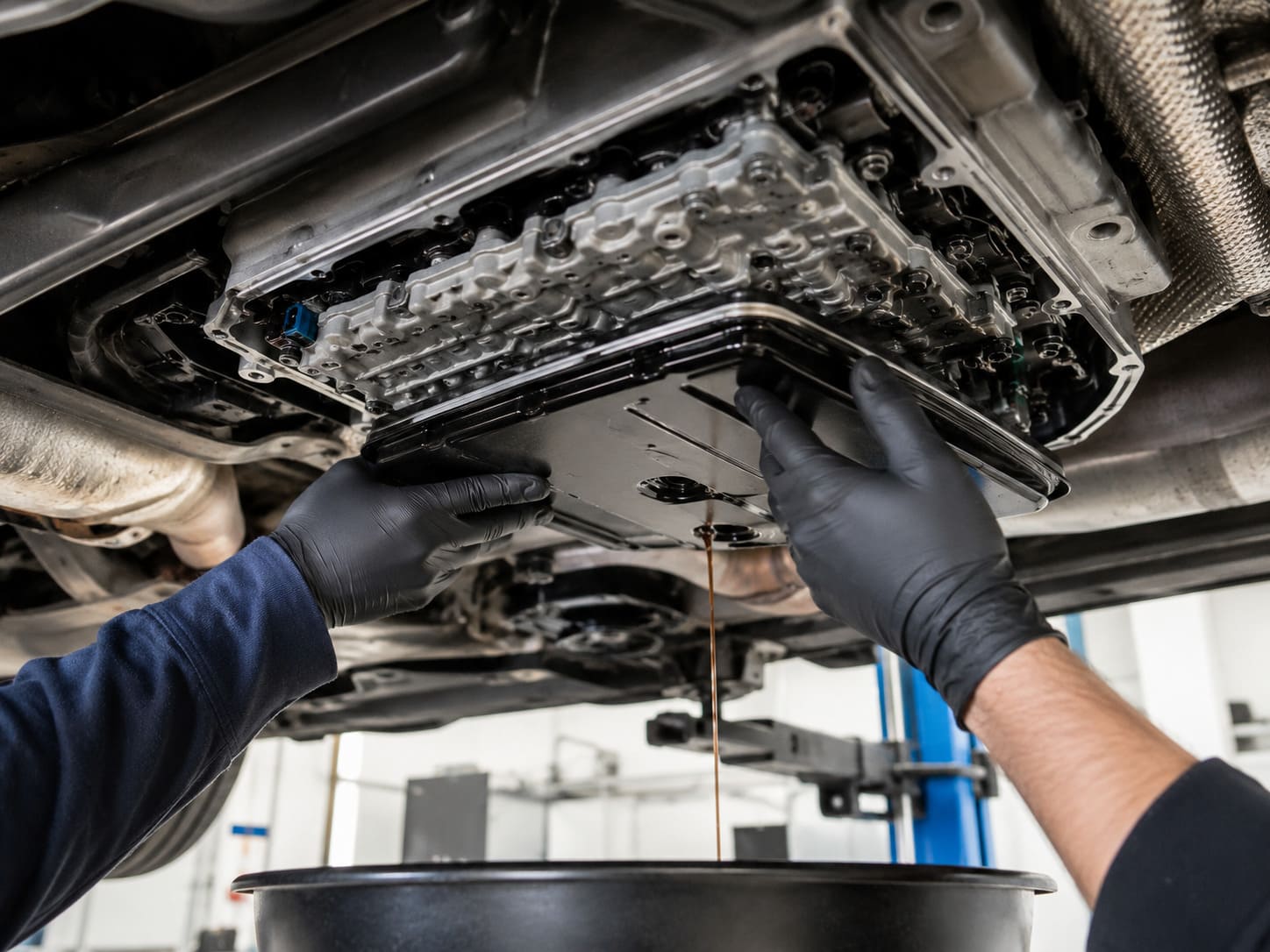
A slipping transmission is usually low or burnt fluid, worn internal clutches, or an electronic fault such as a bad shift solenoid. If the engine revs up but the car does not accelerate to match, check the fluid level and condition first, then get the trouble codes read before the slip wears the clutches further.
In an automatic transmission, each gear is engaged by packs of friction clutches or bands that are squeezed together by fluid pressure. A slip happens when that grip fails: the engine side spins faster than the wheel side because the clutch pack is not holding. You see it on the tachometer as a sudden flare of a few hundred RPM, often during a shift or when you press the gas to pass.
Every slip generates heat and sheds friction material into the fluid. That debris clogs passages and makes the next slip more likely, so this is a problem that gets worse on its own. Catching it while the cause is still fluid or a solenoid can be the difference between a few hundred dollars and a full rebuild.
This guide covers conventional geared automatics. If your car has a CVT, which has no fixed gears and is common in Nissan, Subaru, Honda and Toyota sedans and small SUVs, the symptoms and fixes are different, so see the CVT shudder guide.
Symptoms
- Engine RPM climbs suddenly while road speed stays the same or rises slowly
- A delay of a second or more before the car moves after shifting into Drive or Reverse
- The car feels like it shifted into neutral for a moment while accelerating
- Weak acceleration from a stop even with the gas pedal pressed hard
- A burnt toast or acrid smell after driving, sometimes with a check engine light
- The transmission stays in one gear and refuses to upshift (limp mode)
Likely causes and what they cost
1. Low transmission fluid from a leak
$150-$450 for most external leaks plus fluidTransmissions do not consume fluid, so a low level always means a leak somewhere. With too little fluid, the pump draws air during hard turns, braking or acceleration, pressure drops, and the clutches cannot clamp fully. Slips that only happen on turns or when the fluid is hot are a classic sign.
The fix: Find and repair the leak (pan gasket, cooler line, axle seal), then fill to the correct level with the exact fluid type the manufacturer specifies.
2. Worn out or burnt fluid
$180-$400Automatic transmission fluid carries friction modifiers that let clutches engage smoothly and grip firmly. Heat breaks those additives down over time. Fluid that has turned dark brown or smells burnt no longer holds pressure or cools well, and the slip can start before anything inside is badly worn.
The fix: A drain-and-fill or a machine exchange with the correct fluid. On a high-mileage unit that has never been serviced, a shop may advise a partial drain-and-fill rather than a full flush to avoid disturbing debris.
3. Faulty shift solenoid or valve body
$300-$700 for a single solenoid, $700-$1,600 for a valve body or solenoid packSolenoids are electrically controlled valves that route fluid to the right clutch pack for each gear. When one sticks or weakens, pressure to that clutch is too low and the gear slips or engages late. These faults usually set a code such as P0750 to P0770 or a pressure control code.
The fix: Replace the failed solenoid, or the full solenoid pack or valve body on transmissions where they are sold as one unit. Many need a computer relearn afterward.
4. Transmission computer or software problem
$120-$300 for a reflash or sensor, $500-$1,200 for a moduleThe transmission control module decides shift timing and line pressure from sensor inputs. A failed speed sensor, corroded connector or outdated software can cause it to command the wrong pressure, or to drop into limp mode where it holds one gear to protect itself.
The fix: Repair the sensor or wiring, or reflash the module with updated software. Dealers often have bulletins that change shift calibration on specific models.
5. Worn clutch packs, bands or torque converter
$2,800-$5,500 for a rebuild, $3,500-$7,500 for a remanufactured unit on most cars, more on luxury and 8 to 10 speed unitsOn high-mileage or overheated transmissions, the friction material inside is simply worn thin. Fluid service will not restore what is gone. A failing torque converter clutch can also slip at cruising speed, showing up as RPM that wanders up and down on the highway.
The fix: A rebuild with new clutches, seals and usually a torque converter, or a remanufactured replacement unit with a warranty.
Costs are typical South Florida ranges for parts and labor, for budgeting only.
What you can check yourself
- 1Note exactly when it slips
Write down whether it happens cold or hot, from a stop or during a shift, and at what speed. A shop can diagnose much faster with a clear pattern, and it helps separate a fluid problem (worse when hot) from a single bad solenoid (one specific gear).
- 2Check the fluid if your car has a dipstick
Many cars check the level hot with the engine running in Park, but some specify Neutral, so read the owner's manual first. Keep hands, sleeves and hair clear of the fan and belts. Pull the dipstick, wipe it, reinsert, and read it. Healthy fluid is red to light brown and smells like oil. Dark brown, black, or a burnt smell points to heat damage.
- 3Look for a leak where you park
Slide a piece of cardboard under the middle of the car overnight. Red or brown oily spots near the center are typically transmission fluid. Do not crawl under a car supported only by a jack.
- 4Get the codes read
Many auto parts stores read basic codes for free, but generic readers do not always show transmission-specific codes. A transmission or full-system scan at a shop usually costs $100-$180 and is often credited toward the repair.
- 5Check for recalls and bulletins
Enter your VIN on the NHTSA recall lookup. Also ask a dealer whether there is a technical service bulletin or extended warranty for your transmission, since some fixes are software updates the manufacturer pays for.
When to take it to a shop
- The fluid is at the correct level and still the transmission slips
- Fluid is dark, smells burnt, or has a sparkly or gritty look on the dipstick
- The check engine light is on along with the slip, or the car is stuck in one gear
- Your transmission is sealed with no dipstick, which is common on newer cars and needs a lift and a scan tool to check the level correctly
- The car will not move, or slips when entering a highway
The Florida factor
Heat is what kills automatic transmission fluid, and South Florida driving piles it on. A car that crawls on Glades Road near Town Center or sits in I-95 backups with the A/C on high runs its fluid hotter than the same car on an open highway. Most owner's manuals list this kind of stop-and-go, high-temperature driving as severe service, which calls for a shorter fluid interval than the normal schedule. Many local owners never read that line.
Snowbird cars bring a different problem. A car that sits from April to November can develop dried seals that seep fluid once it starts moving again, and the first sign may be a slip a few weeks after the owner returns. If your car sat for the summer, check under it for fresh drips during the first month back.
Flooded streets during afternoon storms and hurricane season are a hidden risk. If water rose above the bottom of the doors, it may have entered the transmission through the vent. Water turns fluid milky pink, and that fluid will not hold pressure for long. A transmission that starts slipping after a flood event should be checked before it does more damage.
Notes for specific makes
- Honda: Five-speed automatics behind the V6 in mid-2000s Accord, Odyssey and Pilot models had a reputation for second and third gear slipping and clutch wear. Many have been rebuilt already, but a used one should get a fluid check and a road test before purchase.
- Mercedes-Benz: On the 7-speed 722.9 automatic, a failing conductor plate or speed sensor inside the unit can trigger limp mode, which feels like the car is stuck in second or third gear. It is often an electrical repair rather than worn clutches.
- Ford: Ford recalled certain F-150 trucks with the 10-speed automatic in 2021 for a fault where the truck could falsely detect low fluid pressure and shift into neutral. If yours feels like it suddenly loses drive, check the VIN for open recalls.
Transmission Repair shops near Boca Raton
- Transmission Doctor7548 West McNab Road, Coconut Creek, FL, 33068
Frequently asked questions
Will a transmission additive fix slipping?
Additives can occasionally soften dried seals on an old unit, but they cannot replace worn friction material, and some manufacturers warn against them. Treat a bottle as a stopgap at best, and do not use one before a shop has diagnosed the transmission.
How long can I drive with a slipping transmission?
There is no safe number. A mild slip from low fluid may cause no further harm once topped off, while a slip from worn clutches can turn into no movement at all within days. Each slip makes heat and debris, so get it checked within the week.
Is it worth fixing a slipping transmission on an older car?
Compare the repair estimate to the car's value and its other needs. A $400 fluid or solenoid repair is almost always worth it. A $5,000 rebuild on a car worth $6,000 is a harder call, so get a second diagnosis before committing.
Does a fluid change cause slipping?
It does not cause wear, but on a high-mileage transmission with very old fluid, a change can expose wear that the old, debris-laden fluid was masking. That is why some shops recommend a gentle drain-and-fill on neglected units.
Can a bad engine cause something that feels like slipping?
Yes. A misfire or a failing torque converter clutch can feel similar. A scan tool that shows engine RPM against transmission output speed tells a shop whether the transmission is actually slipping.
Related guides
More on this job: Transmission Repair in Boca Raton, costs and how to choose a shop
- RepairPal: Transmission slipping out of gear
- RepairPal: Transmission replacement cost estimate
- AAA: Automatic transmission fluid service
- AAA: Average mechanic labor rates by state
General information, not a diagnosis. A car problem can have causes a guide cannot see, so have anything safety-related inspected in person. Read our editorial policy.