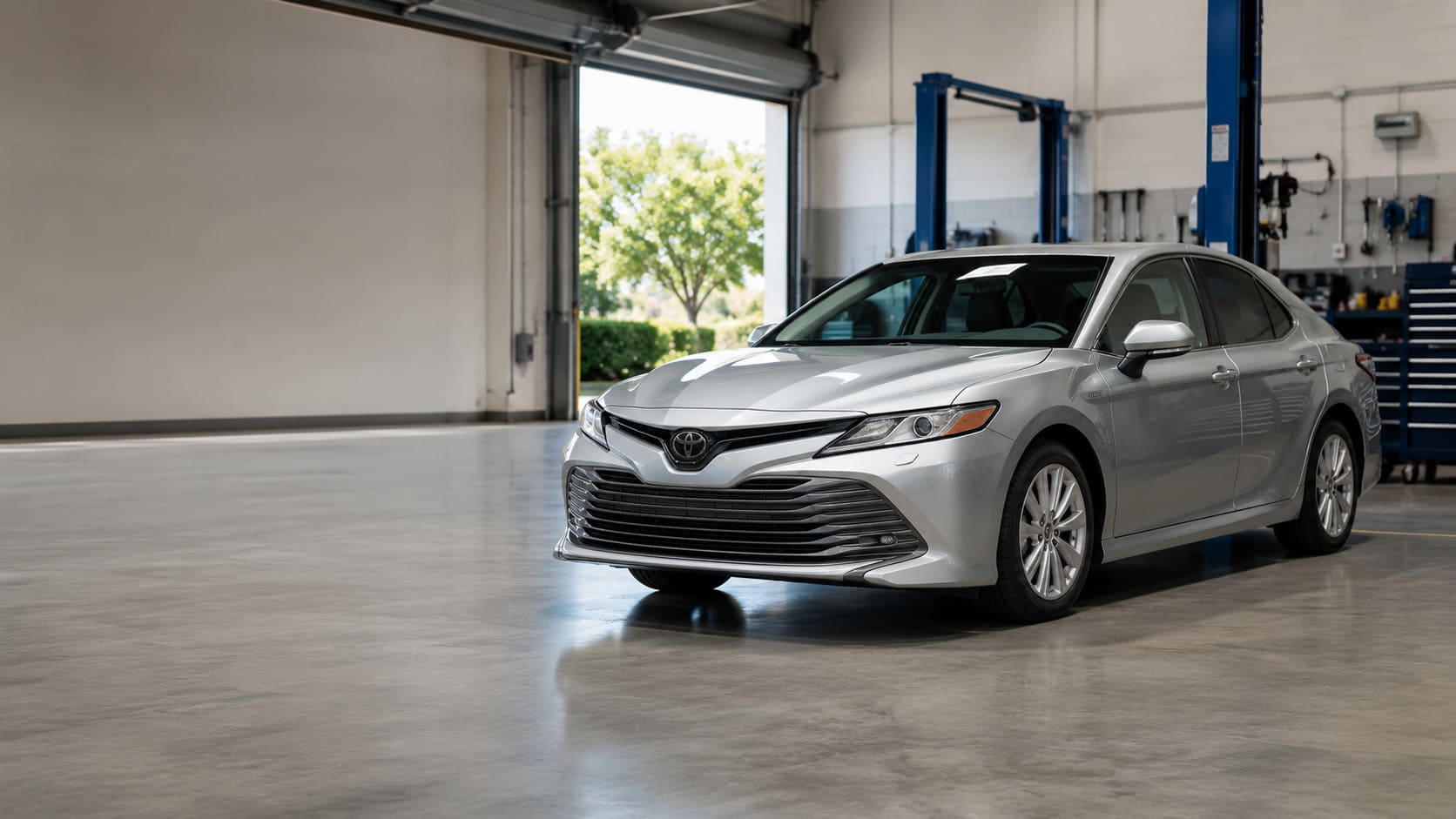
The Corolla is the cheapest Toyota to keep on the road, and RepairPal ranks it first of 36 compact cars. The years to look at closely are 2009, with oil use and water pump complaints, and 2009-2013 cars that need proof their Takata airbag inflators were replaced. Newer cars mostly need recall checks and regular CVT fluid.
If you want the lowest running cost of any car on this site, a Corolla is close to it. RepairPal gives it 4.5 out of 5, puts average unscheduled repairs at about $362 a year, and estimates only a 7 percent chance of a severe repair in any year, against 11 percent for compact cars in general. That is why so many Corollas in Boca are on their second or third owner, often a student at FAU or a commuter running I-95 to Fort Lauderdale.
Cheap to run is not the same as problem-free. The 2009 model has the most complaints of any Corolla on CarComplaints, the 2009-2013 cars carry Takata airbag recalls that matter more in Florida than almost anywhere, and every Corolla sold since 2014 has a CVT option that needs its fluid changed in this heat.
Toyota Corolla generations
Twelfth generation (E210)
2020-present sedan, 2019-present hatchbackFirst Corolla sold in the US as a hybrid. From the 2023 refresh every gas Corolla gets the 2.0-liter and the hybrid can be had with all-wheel drive. The hatchback is 2.0-liter only.
Eleventh generation (E170)
2014-2019The CVT arrived in the US Corolla with this generation. Facelifted for 2017, when the SE and XSE trims arrived. Covered by the airbag control unit recall 20V-024.
Tenth generation (E140)
2009-2013Simple and tough, but 2009 is the problem year. All of these cars are in Takata passenger airbag inflator recalls.
Known Toyota Corolla problems by year
Excessive oil consumption
The 2009 Corolla's worst-rated problem on CarComplaints is oil consumption, typically noticed around 100,000 miles, with repairs averaging about $4,500. Measure it yourself: top up to the full mark, drive 1,000 miles, and see how much is gone. More than a quart in that distance means the rings are worn.
Guide: Blue smoke from the exhaust: is my car burning oil?Water pump leaks on the 1.8-liter
Water pump failure is the second most-reported 2009 problem, at about 62,000 miles on average. The pump seal weeps first, leaving pink or white crust around the pump and a faint sweet smell after a drive. Catch it at the seeping stage and it is a routine job. Ignore it until the temperature gauge climbs and you risk a warped head.
Guide: Sweet smell from my car, like maple syrup: is it a coolant leak?Takata passenger airbag inflators
Takata inflators use a propellant that breaks down with long exposure to heat and humidity and can rupture in a crash, throwing metal fragments. Corollas from 2009-2013 were recalled under several campaigns, including 18V-024, and NHTSA puts Florida in Zone A, the highest-risk group of states. If a used Corolla from these years has no record of the airbag recall work, treat it as unsafe for the passenger seat until a dealer replaces the inflator at no cost.
Airbag control unit that may not deploy
Recall 20V-024 covers an airbag control unit that can malfunction in certain crashes, so the airbags and seat belt pretensioners might not fire. You will not notice anything wrong in daily driving, which is exactly why it gets skipped. The repair is free, so confirm the recall shows as complete on any 2011-2019 Corolla.
A/C stops cooling
The top 2014 Corolla complaint on CarComplaints is the A/C not working properly, around 58,000 miles and about $1,300 to fix on average. On any car this age, a leaking condenser or a tired compressor is the usual cause, and both work harder here than in most of the country. If cold air turns cool on the highway and warm at a light, have the system checked before the compressor fails completely.
Guide: Why is my car A/C blowing warm air?Cracking intermediate steering shaft
Recall 24V-878 covers an intermediate steering shaft that can crack and separate, which would cause a loss of steering control. A clunk or play felt through the wheel on a recent Corolla is a stop-and-check symptom, not something to drive around with.
Notable recalls
- 18V-024 (2009-2013): Takata passenger frontal airbag inflators can explode in a crash after long exposure to heat and humidity. Replacement inflator at no cost.
- 20V-024 (2011-2019): The airbag control unit may malfunction in certain crashes, so airbags and pretensioners may not deploy.
- 10V-017 (2009-2010): Accelerator pedal friction and condensation can make the pedal hard to press, slow to return or stuck partly down.
- 20V-682 (2020): In-tank low-pressure fuel pump can fail and stall the engine while driving.
- 24V-878 (2023-2024): Intermediate steering shaft may crack and detach, risking loss of steering control. Includes the Corolla Hybrid.
Recall repairs are free at any franchised Toyota dealer. Check your VIN at nhtsa.gov/recalls, since this list is not complete.
Maintenance that matters
| Every 5,000 miles | Rotate tires and check the oil level. On a 2009-2010 car with any history of oil use, this is non-negotiable. |
| Every 10,000 miles or 12 months | Synthetic oil and filter in the grade molded into the filler cap. Pull the dipstick between changes. |
| Every 15,000-20,000 miles | Replace the cabin air filter. A dirty one makes a small Corolla A/C struggle on a 94-degree afternoon. |
| Every 30,000-40,000 miles | Change CVT fluid using Toyota's specified fluid only. Toyota rates it for much longer, but heat and idling in traffic break fluid down faster. |
| Every 60,000 miles | Brake fluid flush, serpentine belt inspection, and a look at the water pump weep hole for crust. |
| Every 120,000 miles | Iridium spark plugs. On the 1.8-liter they are easy to reach, which keeps the bill low. |
Confirm against your owner's manual or maintenance minder for your exact year and engine.
Typical Toyota Corolla repair costs
| Job | Typical cost | Notes |
|---|---|---|
| Synthetic oil change | $70-$115 | |
| Front brake pads | $290-$400 | Rear drum brakes on many 2014-2019 trims last a very long time. |
| Water pump, 1.8-liter | $500-$700 | Add a coolant flush if the old coolant is dirty. |
| A/C compressor | $1,000-$1,750 | |
| Alternator | $550-$850 | |
| Spark plugs | $190-$290 | |
| CVT or automatic fluid service | $240-$330 | |
| Airbag recall work | free | Any Toyota dealer, whether or not you bought the car there. |
Typical South Florida ranges for parts and labor, for budgeting only. Your quote depends on the vehicle and the shop.
Buying a used Toyota Corolla
- The 2014-2019 Corolla is the easiest recommendation: no oil consumption pattern, the same durable 1.8-liter, and low prices. Choose the CVT or the six-speed manual over the old four-speed automatic on the L trim for better economy. Check that recall 20V-024 is closed.
- For a 2020 or newer car, the 2.0-liter models with the launch-gear CVT feel noticeably stronger merging onto I-95 than the 1.8-liter. The Corolla Hybrid is a good choice for mostly city driving. Confirm the 2020 fuel pump recall and, on 2023-2024 cars, the steering shaft recall.
- Treat a 2009 Corolla as the riskiest year. Look for oil burning, coolant crust around the water pump, and airbag recall paperwork. A 2011-2013 car is a better older pick, but it still needs proof the Takata inflator was replaced.
- Avoid any Corolla with a flood history title or signs of water in the cabin. Small cars sit low, and a Boca street that floods during a summer downpour reaches their door sills faster than an SUV's.
The Florida factor
Florida is in NHTSA's highest-risk zone for Takata inflators because the propellant degrades fastest with years of heat and humidity, and a Corolla that has spent fifteen summers parked outside is exactly the car those recalls were written for. The replacement is free and is the single most important thing to verify on a 2009-2013 Corolla. Do not carry passengers in the front seat until it is done.
The Corolla's small engine works hard to run the A/C in Palm Beach County traffic, so the condenser and its fan are where heat damage shows up first. Rinse bugs and road grit from the condenser behind the front grille a few times a year, especially after driving the Turnpike at night in love bug season in May and September, when the insects clog the fins and acidify the paint.
A low-slung sedan also suffers from parking lot flooding on Federal Highway and around Mizner Park during heavy afternoon storms. Water deep enough to reach the bottom of the door can soak the carpet padding and reach wiring under the seats. If you drove through standing water and the car now shifts oddly or smells damp, have it checked before mold and corrosion set in.
Repair shops near Boca Raton
- Boca Auto Fix4301 Oak Circle, Boca Raton, FL, 33431
- Element, Pickup trucks and trailer repair3120D Northwest 16th Terrace, Pompano Beach, FL, 33064
- Europen Auto Service CentreParkland, FL
- Ferrari of Boca Raton6403 W Rogers Cir, Boca Raton, FL, 33487
- FirestonePompano Beach, FL
- Firestone1259 North Federal Highway, Boca Raton, FL, 33432
Toyota Corolla FAQ
Is the Corolla CVT reliable?
Toyota's CVTs have held up well compared with many in the class. The 2.0-liter models since 2019 use a CVT with a physical first gear for launches, which reduces belt strain. Regular fluid changes in Florida heat are the best protection.
How can I tell if my Corolla airbag recall was done?
Enter the VIN at nhtsa.gov/recalls. A completed recall no longer shows as open. A Toyota dealer can also print the service history for that VIN, which lists the airbag work and the date.
Which is better, the Corolla Hybrid or the gas Corolla?
For stop-and-go Boca driving, the hybrid's fuel savings add up quickly and its brakes last longer. On long highway commutes the gap narrows. The gas car is simpler, and its repairs are slightly cheaper once out of warranty.
How long does a Corolla last?
With on-time oil and coolant changes, 200,000 miles is common. The biggest threats are neglected oil changes, overheating from a weeping water pump, and A/C repairs that cost more than an older car is worth.
Guides for Toyota Corolla owners
More for Toyota owners: Toyota owner's guide
- NHTSA recall 18V-024: Takata passenger airbag inflators
- NHTSA recall 20V-024: Corolla airbag control unit
- NHTSA Takata defect report for Zone A states, including Florida
- CarComplaints: 2009 Toyota Corolla problems
- RepairPal: Toyota Corolla reliability
General information, not a diagnosis. A car problem can have causes a guide cannot see, so have anything safety-related inspected in person. Read our editorial policy.