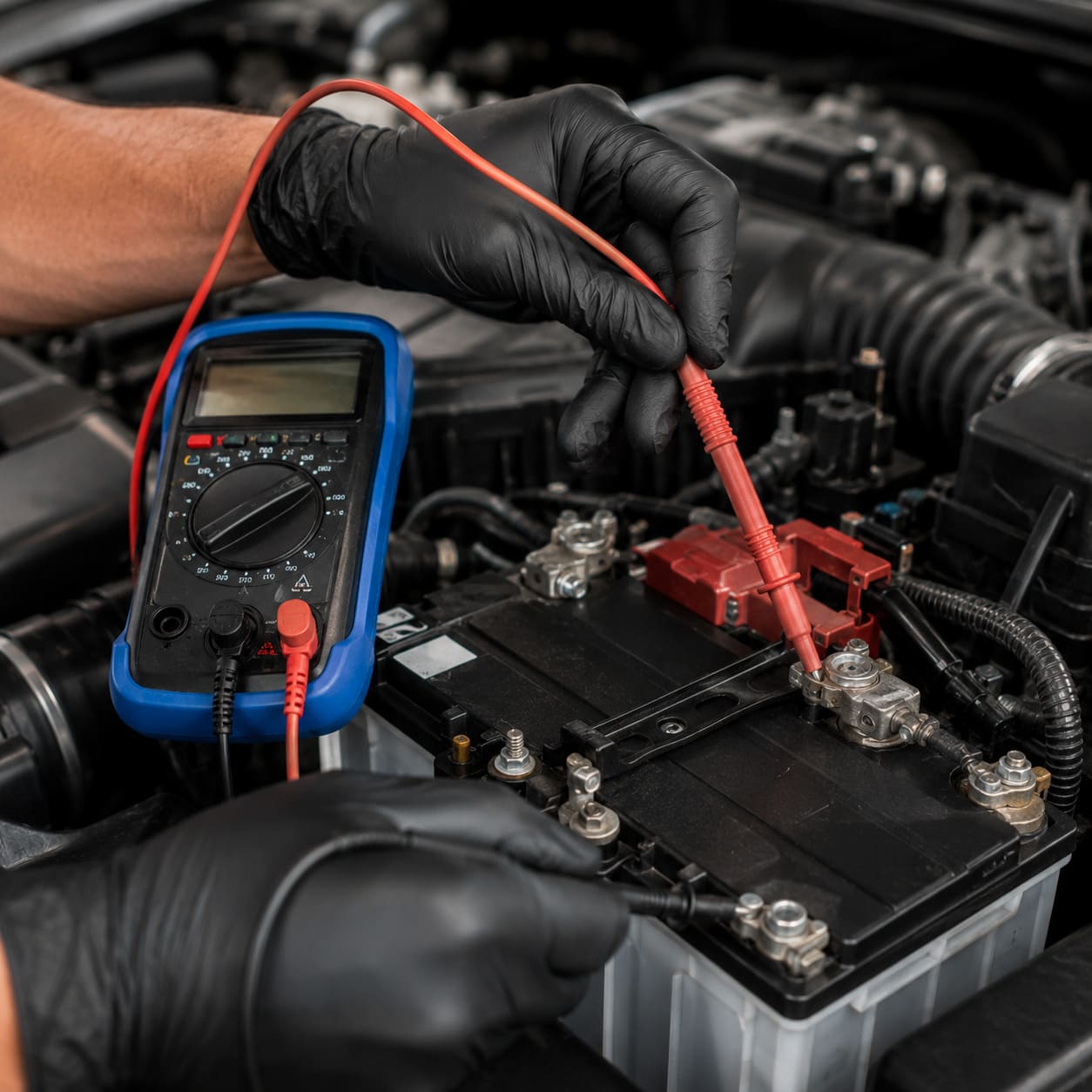
If only the headlights are dim and steady, the usual culprits are aging bulbs or plastic lenses clouded by sun. If they flicker, or the dash dims along with them, the cause is electrical: a loose connector, a corroded ground or a charging system that is not keeping up. Lights that brighten when you rev the engine point straight at the alternator.
Dim and flickering are different problems, and it helps to treat them separately. A steady but weak beam is usually about light getting out: an old halogen bulb, a lens that has oxidized in the sun, or a reflector that has dulled. Flicker is about power getting in. Something in the circuit is making and breaking contact, or the voltage itself is moving around.
The type of headlight matters too. Halogen bulbs are cheap and simple, typically rated for roughly 500 to 1,000 hours. HID lamps use a ballast to fire an arc and are known for flickering or color-shifting near the end of their life. LED headlights last far longer but are often sealed into the housing, so a failure can mean replacing a whole assembly. Knowing what your car has, from the owner's manual, before you start avoids buying the wrong part.
Symptoms
- Beams look yellow and short compared with newer cars around you
- One headlight is noticeably dimmer or a different color than the other
- Headlights flicker over bumps or at a steady speed
- Headlights and dash lights dim at idle and brighten when you accelerate
- An HID or LED headlight flashes, turns pink or purple, or goes out and comes back
- Lens surface is yellowed, cloudy or rough to the touch
Likely causes and what they cost
1. Sun-oxidized headlight lenses
$20-$40 for a DIY kit; $75-$150 professionally; $200-$800 per housing if replacement is neededPlastic polycarbonate lenses have a UV coating that breaks down after years of sun. The surface yellows and frosts, scattering light before it reaches the road. Bulbs may be fine while output drops sharply.
The fix: Restore the lenses by sanding and polishing, then sealing with a UV clear coat. Badly crazed lenses may need new housings.
2. Aging halogen bulbs
$20-$60 for a pair DIY; $50-$150 installed, more where the bumper or wheel liner must come offHalogen bulbs dim and shift yellow as the filament ages, and the inside of the glass can darken. Replacing just one leaves a mismatched pair, which is why both are usually done together.
The fix: Replace both low-beam bulbs with the correct bulb number. Do not touch the glass with bare fingers, skin oil causes hot spots and early failure.
3. Loose connector or corroded ground
$100-$250Each headlight has a plug and a ground path back to the body. Heat cycling loosens plugs and moisture corrodes grounds. The result is flicker over bumps or a light that cuts out and returns. A melted or browned connector is a sign of high resistance.
The fix: Clean or replace the connector pigtail and repair the ground point.
4. Failing HID ballast or bulb
$100-$300 for a pair of HID bulbs installed; $200-$700 for a ballastOn cars with factory HID headlights, an aging bulb or ballast causes flashing, a pink or purple hue, or a light that shuts off after a few minutes. Swapping sides with the good bulb shows which part is at fault.
The fix: Replace the HID bulb, usually in pairs, or the ballast if the problem follows the side rather than the bulb.
5. Weak alternator or slipping belt
$100-$200 for a belt; $550-$1,100 for an alternatorIf the charging system cannot meet demand, voltage falls and every light in the car dims together, worst at idle with the A/C and wipers running. A whine from the belt or the battery light may appear too.
The fix: Test charging voltage under load, then replace the belt or alternator as needed.
6. Failed LED headlight module
$300-$700 for a driver module; $600-$2,000+ for a complete assembly on many late-model carsFactory LED headlights rarely wear out, but their driver electronics can fail from heat or moisture getting into the housing. The light may flicker, show dark segments, or go out entirely.
The fix: Replace the LED driver module where it is separate, otherwise the complete headlight assembly.
Costs are typical South Florida ranges for parts and labor, for budgeting only.
What you can check yourself
- 1Compare against a wall
Park facing a garage door or wall about 10 to 15 feet away at dusk. Compare the two beams for brightness, color and cutoff height. A big difference side to side points to a single bulb or lens.
- 2Look at the lenses in daylight
Yellow, cloudy or rough plastic is lens oxidation. Moisture droplets inside the housing mean a failed seal, which can also corrode the bulb socket.
- 3Rev test for charging problems
In Park with the lights on and someone watching the beams on a wall, bring the engine from idle to about 2,000 rpm. If the light clearly brightens with rpm, have the charging system tested.
- 4Wiggle test for flicker
With the engine off and lights on, gently move the connector behind each headlight. If the light flickers, you have found the bad connection. Halogen bulbs get extremely hot, so let them cool before touching anything near them, and never handle HID wiring with the lights on, the ballast output is high voltage.
- 5Check the bulb part number
Your owner's manual lists the exact bulb. A wrong bulb or a cheap plug-in LED conversion in a housing built for halogen can cause flicker, glare for other drivers and dash warnings.
When to take it to a shop
- All the lights in the car dim together, or the battery light comes on
- A connector is melted, browned or smells burnt
- Your car has HID or LED headlights and one is flickering or out
- Moisture keeps collecting inside a headlight housing
- The beams are aimed too high or too low after a bulb change or a minor collision
The Florida factor
South Florida sun is the reason so many otherwise healthy cars here have dim headlights. Lenses on cars parked outside year-round, especially facing west into the afternoon sun, can cloud in just a few years. A restoration helps, but it lasts much longer if the lens is finished with a real UV-resistant clear coat rather than just polished.
Florida Statute 316.217 requires headlights on from sunset to sunrise and during any rain, smoke or fog, so they matter on a 3 p.m. July thunderstorm commute on I-95 as much as at night. Those same storms drive water into headlight housings through cracked seals, and a housing that fogs up after every downpour will eventually corrode its bulb socket or kill an LED driver. Near the beach, salt mist speeds up the corrosion on ground points under the front bumper.
Notes for specific makes
- Lexus: Older Lexus models with factory HID headlights are known for flicker or a color shift toward pink as the bulbs age. Replacing both HID bulbs, rather than the ballast, solves most cases.
- Mercedes-Benz: Mercedes-Benz models with HID or LED headlights can be expensive when a ballast or LED module fails, and some housings are sold only as complete units. Ask whether the separate module is available before approving a full assembly.
- BMW: BMWs commonly show a headlight or bulb warning when power draw changes, so aftermarket LED bulbs in a halogen housing can trigger errors or flicker. Factory bulb types avoid the problem.
Battery & Electrical shops near Boca Raton
We are still adding shops for this service. Browse the directory or use the quote form.
See all shops for this serviceFrequently asked questions
Can a bad battery make my headlights dim?
With the engine off, yes. Once the engine is running, the alternator powers the lights, so dimming while driving points more toward the charging system or wiring than the battery.
Should I replace headlight bulbs in pairs?
Yes. Bulbs age at a similar rate, and a new bulb next to an old one gives uneven light. If one has failed, the other is usually close.
Are plug-in LED bulbs a good upgrade?
Often not. Halogen housings are designed around a halogen filament, and many LED bulbs scatter light and glare at other drivers. Use bulbs that are legal for road use and approved for your housing.
Is a headlight restoration worth it?
For cloudy lenses, it is one of the cheapest safety improvements you can make. Expect $75-$150 professionally. Without a UV coating, the haze can return within a year.
Related guides
More on this job: Battery & Electrical in Boca Raton, costs and how to choose a shop
- Florida Statutes 316.217: when lighting equipment is required
- NAPA Know How: do headlights dim over time?
- Kelley Blue Book: car headlights complete guide
General information, not a diagnosis. A car problem can have causes a guide cannot see, so have anything safety-related inspected in person. Read our editorial policy.