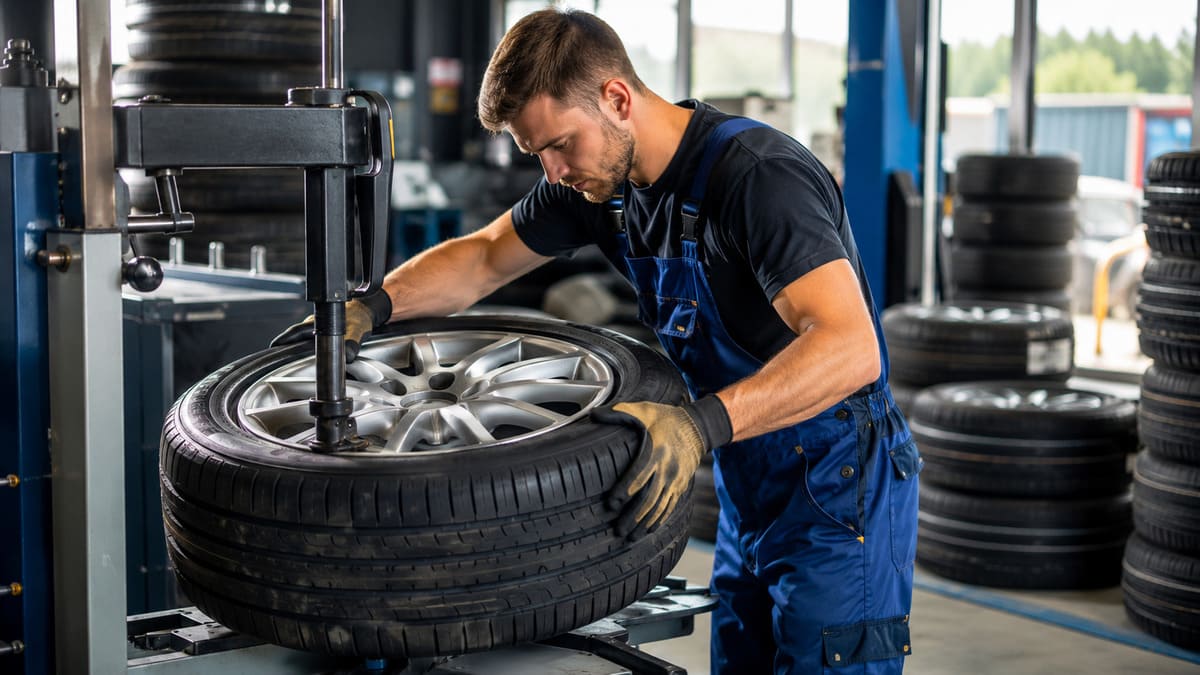
A puncture up to 1/4 inch in the main tread area can be permanently repaired with a combination plug-patch installed from inside the tire after it is removed from the wheel. A plug pushed in from outside is an emergency fix to get you to a shop. Anything in the shoulder or sidewall, larger than 1/4 inch, or on a tire driven while flat means a new tire.
The decision is not really plug versus patch. It is about where the damage is, how big it is, and what happened to the tire after it was punctured. The US Tire Manufacturers Association publishes the procedure most tire shops follow, and its rules are short: repairs only in the tread area, injuries no larger than 1/4 inch (6 mm) in diameter, the tire must be removed from the wheel and inspected inside, and the repair must both fill the hole and seal the inner liner. A plug alone or a patch alone does not meet that standard.
Why both? A patch glued to the inner liner stops air loss, but the puncture channel through the tread stays open, and water can travel in and rust the steel belts. A plug fills the channel but does not seal the liner reliably and can work loose under heat. The one-piece repair unit, a rubber stem with a patch attached, solves both problems in one installation.
Two more rules are worth knowing. Repairs cannot overlap one another, and a tire with an existing improper repair, such as an outside plug that was left in for good, should be scrapped rather than repaired again.
Symptoms
- You can see a nail or screw head in the tread
- One tire needs air every few days
- The tire pressure warning came on after driving past a construction site
- A hissing sound from a tire, or bubbles when sprayed with soapy water
- A cut, gouge or embedded object near the edge of the tread or on the sidewall
Likely causes and what they cost
1. Small puncture in the central tread
$30-$60 at most tire shops; often free under a road hazard plan or at the store that sold the tireA nail or screw in the main tread, away from the outer ribs, with a hole of 1/4 inch or less, is the classic repairable injury. The tread there is supported by the steel belts and is the area the industry repair procedures are written for.
The fix: The tire is dismounted, inspected inside, the injury is drilled clean, and a combination plug-patch unit is installed and cured. The tire is remounted and rebalanced.
2. Emergency external plug
$10-$25 for a plug kit, plus a 12-volt compressor if you do not have oneA rope-style plug kit lets you seal a small tread puncture from outside without removing the wheel. It can hold for a long time, but nobody has inspected the inside of the tire, and the plug is not bonded to the liner, so the industry treats it as temporary.
The fix: Use the plug to get to a shop, keep speeds moderate, and have the tire dismounted and properly repaired. Because the external plug counts as an improper repair if left in place, have it replaced with a proper unit soon.
3. Puncture in the shoulder or sidewall
$120-$300 per tire installed for most cars; $200-$450 for trucks, SUVs and performance tiresThe shoulder and sidewall flex constantly and are not backed by the belt package. A repair there cannot hold reliably, and an injury that runs at an angle from the tread into the shoulder falls in the same category.
The fix: Replace the tire. On all-wheel-drive vehicles, match the tread depth of the others or follow the automaker's guidance.
4. Tire driven while flat or badly underinflated
$120-$300 per tireWhen a tire rolls without air, the sidewalls fold and grind against each other. The inside often shows a ring of rubber dust, creases or a polished band, all signs of internal damage that makes the tire unsafe even if the puncture itself is repairable.
The fix: The shop inspects the inside. If there is run-flat damage, the tire is replaced.
5. Hole larger than 1/4 inch, a cut or multiple close punctures
$120-$300 per tireLarge bolts, metal shards and road debris tear holes too big for a repair unit to seal. Two punctures close together also cannot each get a proper patch without overlapping.
The fix: Replace the tire.
6. Run-flat or acoustic foam tire
$40-$80 for a foam-tire repair; $250-$450 to replace a run-flatRun-flat tires have reinforced sidewalls that may hide internal damage after being driven flat, and each tire maker sets its own repair policy for them. Noise-reduction tires have a foam layer glued inside that has to be cut away around the injury before a patch can bond.
The fix: A shop that follows the tire maker's policy either repairs within its limits or replaces. For foam tires, the foam is removed only at the repair area, the patch is installed, and the removed foam is not replaced.
Costs are typical South Florida ranges for parts and labor, for budgeting only.
What you can check yourself
- 1Find the object without pulling it
Roll the car a few feet at a time and inspect the full tread. Leave any nail or screw in place, since removing it usually turns a slow leak into a fast one.
- 2Measure its distance from the edge
Note whether the object sits in the main tread or in the outer rib near the shoulder. If it is within roughly the outermost tread rib or anywhere on the sidewall, expect replacement rather than repair.
- 3Check how fast it is losing air
Gauge the tire, wait an hour, gauge it again. A loss of a few psi a day can usually be topped off and driven gently to a shop. A tire that drops several psi in minutes should be swapped for the spare.
- 4Use the spare or mobility kit safely
Change a tire only on flat, firm ground well away from traffic, with the parking brake set and hazards on. Never put any part of your body under the car on the jack alone. If your car has a sealant kit instead of a spare, tell the shop, because sealant must be cleaned out before a repair and can affect pressure sensors.
- 5Check for a road hazard plan
Look up your tire receipt. Many retailers include or sell road hazard coverage that pays for repairs or a prorated replacement.
When to take it to a shop
- Any puncture, even if you plugged it yourself, since the inside of the tire needs to be inspected
- The object is in the shoulder or sidewall
- The tire was driven any distance while flat
- The tire has been repaired before and is leaking again
- You used canned sealant and need the tire repaired properly
The Florida factor
Hurricanes are followed by a spike in punctures. After a storm, shingles and roofing nails end up scattered across streets for weeks as roofs are torn off and repaired, and tire shops in Boca and Boynton see the effect. During that window, check your tires every few days and leave nails in until you reach a shop.
Construction never really stops here, from new developments west of State Road 7 to condo renovations along A1A. Screws, framing nails and drywall fasteners collect near site entrances and in the right lane of nearby roads. Giving those curb lanes a wide berth after rain, when debris gets washed into them, reduces the odds.
Heat makes temporary repairs riskier. An external plug in a tire running at highway speed on 95-degree pavement is under more stress than in a cooler climate, so treat a roadside plug as a short-term fix and get a proper inside repair done promptly.
Notes for specific makes
- BMW: Many BMWs come on run-flat tires with no spare. Repair is possible within the tire maker's limits, but if the car was driven any distance with the low-pressure warning on, expect the shop to recommend replacement.
- Tesla: Many Tesla Model 3, Model Y and Model S tires have acoustic foam inside. The tire industry procedure is to remove the foam at the injury, patch from inside and discard the removed piece, but some shops are not set up for it, so call ahead.
- Hyundai: Many recent Hyundai and Kia models ship with a tire mobility kit, a compressor and sealant, instead of a spare. Sealant can coat the TPMS sensor and must be cleaned out before a repair, so tell the shop if you used it.
- Mercedes-Benz: Some Mercedes models use run-flat tires or a sealant kit in place of a spare. Check your trunk before you need it so a nail on I-95 does not become a tow.
Tires & Wheels shops near Boca Raton
- Amway Tire Center Inc.1750 South Dixie Highway, Pompano Beach, FL, 33060
- Discount Tire125 State Road 7, Coconut Creek, FL
- Jones Tires1361 Southwest 1st Way, Deerfield Beach, FL, 33441
- The Tire Choice22923 Sandalfoot Plaza Drive, Boca Raton, FL, 33428
- The Tire ChoiceParkland, FL
- Tire ChoiceDelray Beach, FL
Frequently asked questions
How long can I drive on a plugged tire?
A plug is meant to get you to a shop, ideally within a few days, at moderate speeds. Some plugs hold for thousands of miles, but nobody has checked the inside of the tire, and moisture can enter the belts. Get a proper inside repair.
How close to the sidewall can a tire be repaired?
Repairs belong in the main tread area. The shoulder, where the tread curves into the sidewall, is off limits, and many shops will not repair in the outermost tread rib. If there is any doubt, the industry procedure says to take the tire out of service.
Does a repaired tire lose its speed rating?
Policies vary by tire maker. A proper inside repair is generally intended to restore normal service, but some makers void the speed rating or warranty after any repair, so check with the shop or the tire company if you drive a performance car.
Is canned tire sealant safe?
It is a roadside fix. It can get you moving, but it must be cleaned out and the tire repaired properly afterward, and some sealants can clog TPMS sensors.
Related guides
More on this job: Tires & Wheels in Boca Raton, costs and how to choose a shop
- US Tire Manufacturers Association: Puncture Repair Procedures for Passenger and Light Truck Tires
- USTMA Tire Information Service Bulletin: Noise Reduction Acoustic Foam Tires
- AAA: Tire Plug vs. Patch, Get the Right Tire Repair
General information, not a diagnosis. A car problem can have causes a guide cannot see, so have anything safety-related inspected in person. Read our editorial policy.