A full interior and exterior detail in Boca Raton typically costs $200-$450 for a sedan, paint correction runs $300-$2,000 depending on how many polishing stages, and a professional ceramic coating is usually $800-$2,500 including prep. In strong sun and salt air, a durable sealant or coating plus regular gentle washing protects paint better than an occasional wax.
Detailing is not a repair, and it is not a car wash either. A wash removes loose dirt. A detail decontaminates and restores: clay or iron remover pulls bonded grit out of the paint, polishing removes swirl marks and light scratches from the clear coat, and a protective layer goes on top. Inside, it means extraction-cleaning carpets and seats, treating leather, and cleaning every vent and seam.
The words on detailing menus are not standardized. 'Full detail' at one shop is a wash, vacuum and spray wax. At another it is a full day with paint correction. Price a detail by the hours and steps involved, not by the package name.
Paint protection comes in tiers. Carnauba wax looks warm and lasts weeks. Synthetic sealants last a few months. Ceramic (silica-based) coatings bond to the clear coat and, when applied over properly corrected paint, can last two to five years with care. Paint protection film is a clear urethane layer that stops rock chips, which no coating does.
What the job includes
- A hand wash with a pH-balanced soap, wheel and tire cleaning, and door jambs.
- Chemical decontamination with an iron remover and mechanical decontamination with a clay bar or clay mitt.
- A paint inspection under bright light, ideally with a paint depth gauge, before any machine polishing.
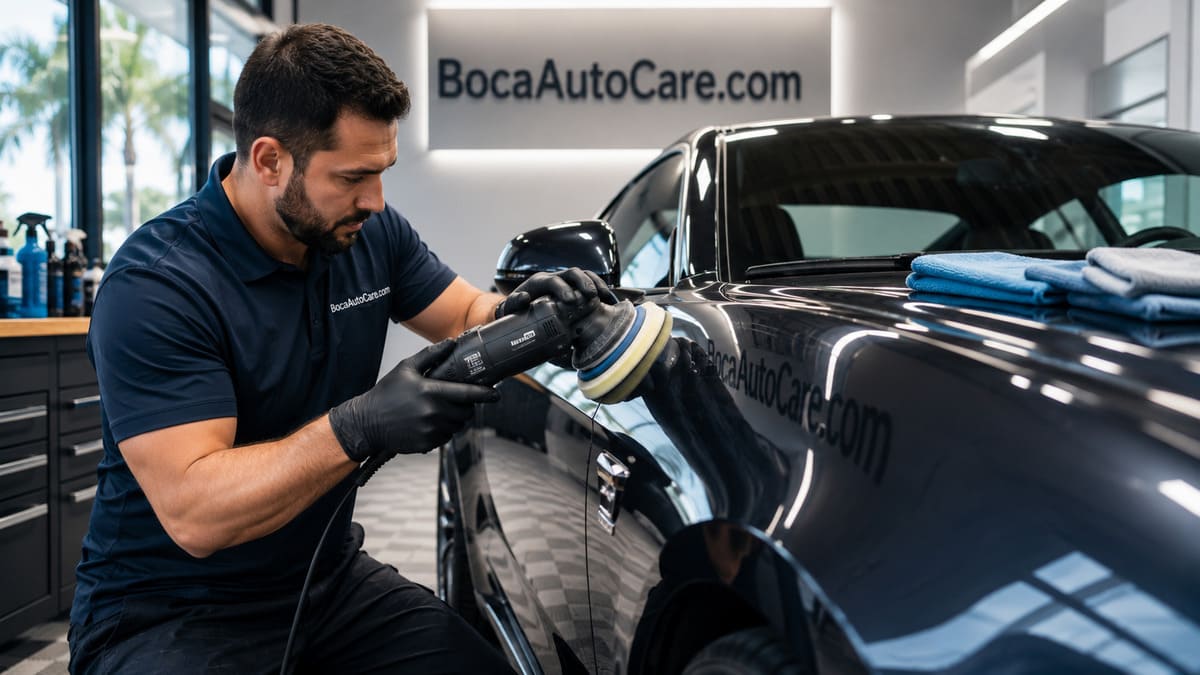
- Polishing in one or more stages for paint correction, then a panel wipe to remove oils before protection goes on.
- Protection: wax, sealant, or ceramic coating, with the expected life and care instructions stated in writing.
- Interior vacuum, hot water extraction of carpets and cloth seats, leather cleaning and conditioning, and UV protectant on the dash and trim.
- Common add-ons priced separately: headlight restoration, engine bay cleaning, odor treatment, pet hair removal, and glass coating.
What detailing costs in Boca Raton
| Job | Typical cost | Notes |
|---|---|---|
| Interior detail, sedan | $150-$300 | SUVs and minivans with third rows cost more. Heavy pet hair is often extra. |
| Exterior detail with clay and sealant | $125-$275 | A good choice twice a year for a car without a coating. |
| Full detail, inside and out, sedan | $200-$450 | Wide range reflects how much polishing is included. |
| One-step paint correction (polish) | $300-$700 | Removes most light swirls and haze. |
| Multi-step paint correction | $800-$2,000 | For dark cars with heavy swirls. Takes one to three days. |
| Professional ceramic coating, with prep | $800-$2,500 | Price depends on correction needed and the coating's rated life. |
| Paint protection film, front bumper, hood and mirrors | $900-$2,000 | Full-car film often costs $4,000-$7,000. |
| Headlight restoration, pair | $75-$175 | Should finish with a UV-resistant coating or the haze returns quickly. |
| Odor or mold treatment (ozone or enzyme) | $75-$200 | Fix the water leak or A/C drain first, or the smell comes back. |
| Mobile detail travel fee | free-$40 | Mobile detailers need shade and often bring their own water. |
Typical South Florida ranges for parts and labor, for budgeting only. Your quote depends on the vehicle and the shop.
Detailing shops near Boca Raton
We are still adding shops for this service. Browse the directory or use the quote form.
See all shops for this serviceHow to choose a shop
- Ask to see the shop's light. A detailer doing paint correction needs bright, color-accurate inspection lights or a covered bay. Correction done in the parking lot at noon hides holograms that show up later.
- Ask whether they measure paint thickness before machine polishing. Clear coat on many factory finishes is thin, and a careless heavy-compound pass can burn through on edges and body lines. A depth gauge reading tells you how much correction is safe.
- For ceramic coatings, ask which product, its rated life, whether the installer is certified by that coating's maker, and what the warranty requires. Many coating warranties require yearly inspections or maintenance washes, and a missed visit can void them.
- Get the package in writing, step by step. A fair quote names each step (decontamination, number of polishing stages, protection product) and the time involved, so you can compare one shop's $350 with another's $900.
- Check reviews that include photos taken outdoors in direct sun, which shows swirls, and look for a detailer who tells you what will not come out, such as scratches through the clear coat or etching from water spots.
Red flags and upsells to question
- A 'ceramic coating' for $99 to $199 with no paint correction. It is likely a spray sealant, and anything sealed in over swirls stays there.
- Lifetime coating claims with no written terms, or a warranty that requires you to return every month for paid maintenance.
- Heavy silicone dressing sprayed on the dash, steering wheel and pedals. It looks shiny, attracts dust and can be slippery and glare-prone.
- Promises to remove scratches you can catch with a fingernail. Those are usually through the clear coat and need paint, not polish.
- Polishing a car that was just repainted. Fresh paint needs time to cure before machine work or coatings.
- Odor treatment sold without asking where the smell comes from. Water inside the car points to a leak, not a cleaning problem.
The Florida factor
Boca Raton sits under a UV index in the very high to extreme range for much of the year, and that sun works on paint, trim and interiors every day the car is outside. Clear coat oxidizes first on the hood, roof and trunk lid; black plastic trim fades gray; dashboards crack; and headlight lenses yellow. AAA testing found that clouded headlights can put out roughly a fifth of the light of new ones, and that lenses can start to deteriorate in three to five years. Covered parking and a windshield sunshade do as much for an interior as any treatment.
Salt air and sprinkler water are the other enemies. Cars parked near the beach or the Intracoastal collect a salty film that attracts moisture, and many neighborhood sprinklers run on reclaimed or well water that leaves hard mineral spots. Left in the sun, those spots etch into the clear coat. A coating does not stop spots from forming, but it makes them much easier to wash off before they etch.
Timing matters with afternoon storms. Detailers here schedule coatings in the morning or inside a bay, because most ceramic products need several hours dry before they get wet. During lovebug season in May and September, wash the front end within a day or two, since the bodies turn acidic in the heat and can stain paint.
Frequently asked questions
Is ceramic coating worth it in Florida?
For a car you plan to keep several years and park outdoors, often yes, because it makes washing easier and resists UV, bird droppings and water spots better than wax. It will not stop rock chips or deep scratches, and it only looks as good as the paint under it, so budget for correction.
How often should I detail my car?
A full detail once or twice a year is enough for most daily drivers, with a regular wash every one to two weeks. Coated cars need fewer full details but still need proper maintenance washes.
Can a detailer fix sun-faded paint?
If the clear coat is oxidized but intact, polishing can bring back much of the gloss. If the clear coat is peeling or flaking, polishing makes it worse, and the panel needs to be refinished by a body shop.
Is mobile detailing as good as a shop?
For washes, interiors and sealants, a good mobile detailer can match a shop. Paint correction and coatings are harder outdoors because of sun, wind, dust and surprise rain. Ask mobile detailers how they handle heat and shade before booking correction work.
Do I need to tip a detailer?
It is common but not required. Many people tip 10 to 20 percent for a job that took real effort, especially at an independent or mobile operation.
Guides related to detailing
- AAA: Dangers of driving with cloudy headlights
- EPA: UV Index scale
- South Florida Water Management District: Year-round landscape irrigation rule
General information, not a diagnosis. A car problem can have causes a guide cannot see, so have anything safety-related inspected in person. Read our editorial policy.