Toyota’s Weird Three-Wheeled i-Road Was a Bold Idea That Never Found Its Lane
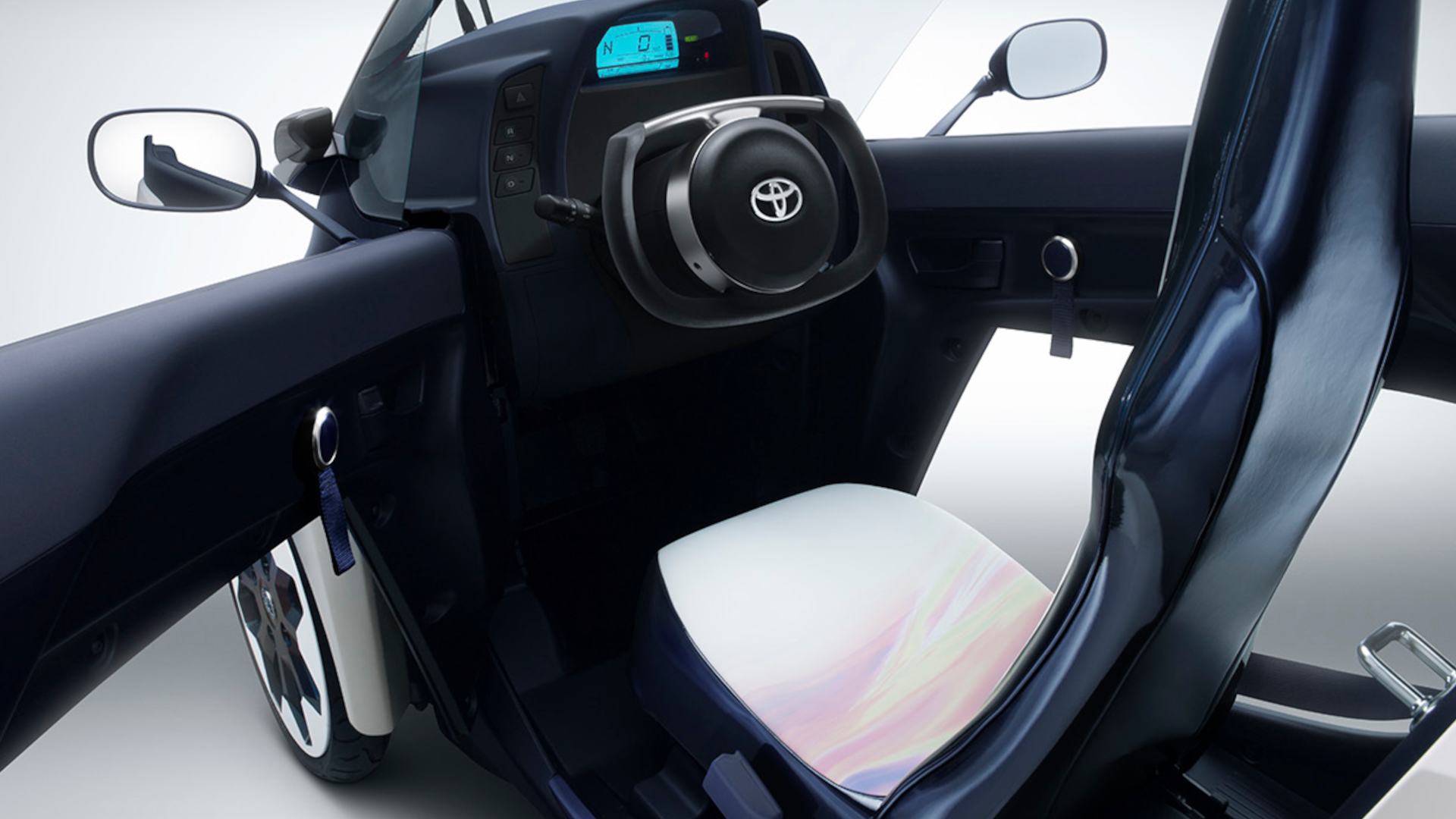
In 2013. Toyota pulled the wraps off something that looked like a rejected sci-fi prop: the i-Road, a three-wheeled, fully enclosed two-seater that was part motorcycle, part car. It was designed to solve urban gridlock, offering a nimble, tilting ride in a tiny electric package.
But for all its clever engineering, the i-Road never made it past the prototype and testing phase. The market just wasn’t ready, and the vehicle’s high cost made it a tough sell from the start.
The i-Road used what Toyota called “active lean technology,” allowing the cabin to tilt into corners like a motorcycle, keeping it stable without any special skill from the driver. It had a top speed of 37 mph and a range of about 31 miles, fine for dense cities like Tokyo or Osaka, but not much else.
Inside, there was tandem seating (passenger behind the driver), a steering wheel, pedals, and basic gauges. You didn’t need a motorcycle license or a helmet, which was part of the appeal. 4 horsepower, it wasn’t going anywhere fast.
The biggest problem? People in Japan already had world-class public transit, cheap, clean, and efficient. So the i-Road was solving a congestion problem that didn’t really exist there. Regulators were also baffled: Was it a car? A motorcycle? A quadricycle? That confusion made licensing, insurance, and safety certification a nightmare.
Meanwhile, the price tag, estimated between $14,000 and $16,000, was far more than an electric scooter, and charging infrastructure was still spotty. Toyota eventually shelved the project.
Today, the i-Road stands as a fascinating what-if. It was stylish, innovative, and technically impressive, but it was too niche and too early. Nissan later cracked the code with the Sakura, a four-seat kei EV that costs less, charges at home, and sells like hotcakes in Japan. Toyota itself moved on with the gas-powered Pixis Epoch.
The i-Road proves that even the biggest automakers can miss the mark, but sometimes the misses are the most interesting stories.
Source: CarBuzz
Plain-English guides to common problems and what they cost in Boca Raton, plus local shops.