Toyota's Clever License Plate Trick Boosts GR GT Race Performance
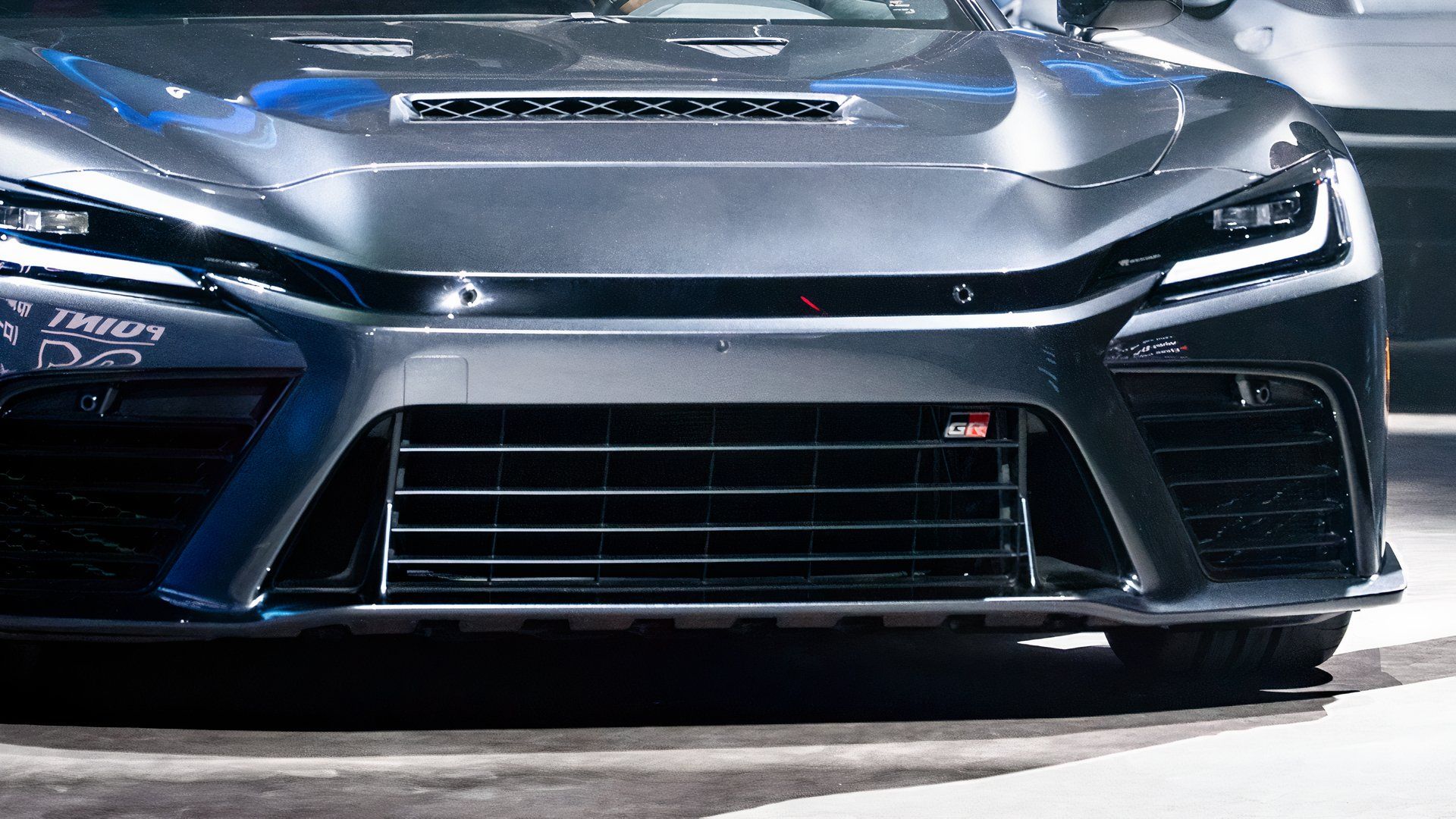
Toyota's GR GT sports car was built with a clear goal: to serve as the basis for a top-tier GT3 race car. That mission shaped the engine, design, and weight distribution. But one odd little detail, two small tabs above the license plate, seems pointless on the road yet is vital on the track.
Those tabs, which hold the license plate lights for road legality, also extend the car's permanent bodywork further backward. According to Road & Track, which learned this during a Toyota press briefing, GT3 rules tie the rear wing's mounting position to the rearmost edge of the bodywork.
By adding the tabs. Toyota can place the wing further back, gaining more downforce without altering the wing's size or shape.
This isn't Toyota's first rules exploit. In the late 1990s, the GT-One supercar was built in just two examples to qualify its racing version for Le Mans. Toyota also convinced the sanctioning body that the empty fuel tank counted as the required cargo area, avoiding the need for extra interior space.
Around the same time, the Celica GT-Four road car came with hardware needed for the race car's anti-lag system, hard to hook up on the street but handy for the track.
These details show that selling the GR GT in large numbers was never the priority. Only a couple hundred units will reach the US. Instead, the car exists to be competitive in racing and to sell that GT3 version to private teams. Meanwhile, Genesis is developing its own sports car and GT3 contender with the Magma GT, but that road car appears aimed at higher volume and more variants, with a stronger focus on looks.
Source: CarBuzz
Plain-English guides to common problems and what they cost in Boca Raton, plus local shops.