The Nissan GT-R R35: The Factory-Built 1,000-HP Tuning Legend
The Nissan GT-R R35 arrived in 2007 with a mission: to disrupt the supercar hierarchy. It was a giant killer, a high-tech platform that could shame Italian exotics on the Nürburgring for a fraction of the cost. Its appeal wasn't just raw power, it was the sophisticated all-wheel-drive system and dual-clutch transmission that let anyone achieve hypercar-level acceleration with clinical consistency.
But the GT-R's lasting legacy isn't its factory lap times. Its true impact lies in the headroom Nissan left for the aftermarket. The heart of the car, the VR38DETT twin-turbo V6, transformed it into a global tuning benchmark. The engine was built to be modified, and its factory output was merely a starting point.
While Nissan never sold a straight-off-the-line 1,000-hp R35, the brand's motorsport and tuning arms pushed the platform beyond the four-figure mark. The Nissan DeltaWing GT-R LM NISMO program used a heavily developed VR38-based architecture. And Infiniti, Nissan's luxury sister brand, presented a model with a factory-tuned R35 engine pushing a clean 1,000 hp to the wheels, featuring Garrett G-Series turbochargers, a custom fuel system, intake, exhaust manifold, engine coolers, and new rods and bolts.
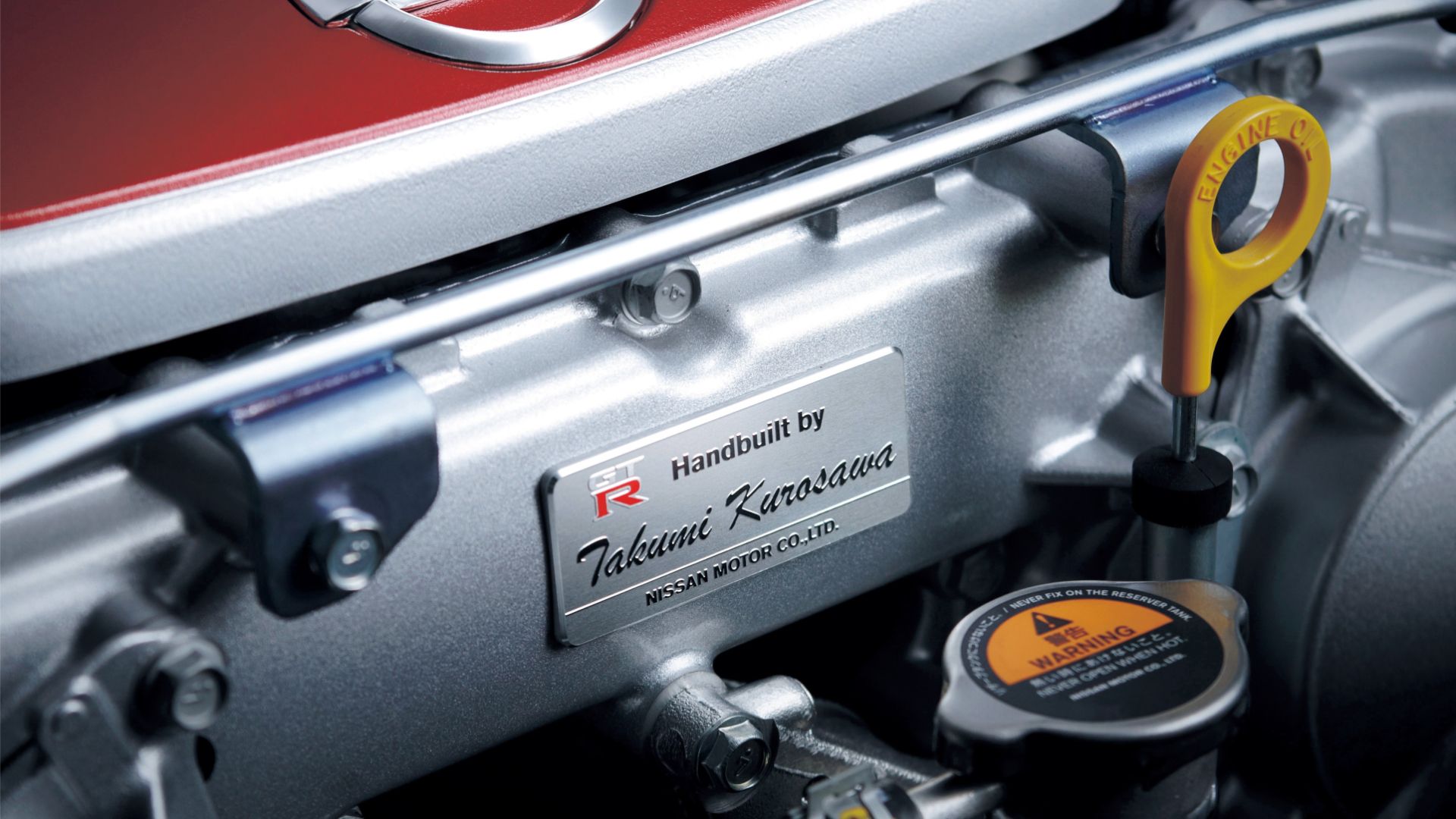
The VR38 is hand-assembled in a dust-free clean room by one of only five master craftsmen, known as Takumi, whose names are stamped on the engine block. 15mm plasma-sprayed mirror bores, and integrated exhaust manifolds that reduce turbo lag and eliminate a common gasket failure point.
The factory cylinder heads flow enough air to support nearly 1,200 hp before becoming a bottleneck, a figure verified by T1 Race Development, whose Stage 1 build reaches that number using the stock, unported heads.
However, the stock connecting rods bend once torque crosses 600-650 lb-ft, typically around 800 wheel horsepower, and piston ring lands are prone to cracking under extreme cylinder pressure. To hit 1,000 hp safely, you need 60mm+ turbochargers, 1,700cc injectors, twin 450lph fuel pumps, and E85 fuel.
Tuners limit torque to 650-700 lb-ft in the mid-range to protect the rods, then let horsepower climb to 1,000 at the top of the rev range.
The weak link is the BorgWarner GR6 dual-clutch transmission. Factory clutch baskets crack, and the 1st-gear assembly strips during hard launches. A 1,000-hp build requires billet clutch baskets with 18 to 20 plate kits and strengthened gearsets from companies like Dodson or Sheptrans.
The Cobb Tuning Brown Car is the most famous documented example: a completely unopened long-block produced a verified 879 wheel horsepower on E85, roughly 1,000 at the crank, and survived over 10 race weekends without mechanical failure. The AMS Alpha 10 package became the gold standard for the 1,000-hp street car, running mid-9-second quarter-mile passes on factory internals.
In the UK, Litchfield Motors' Stage 5 kit uses Garrett G25-660 cores to hit the 1,000-hp ceiling, with a Safe Map limiting daily use to 750-800 hp.
Building a 1,000-hp GT-R costs roughly $30,000 on top of the car for a risky stock-internals build, or $55,000 for a forged-internals build. Later EBA-generation cars hold prices above $110,000, making the total cost substantially higher.
The VR38DETT has taken the mantle from the RB26 and 2JZ. But a credible challenger has emerged: the BMW S58, found in the current M3 and M4, is hitting 1,000 hp on stock internals with even less effort. For now, the VR38 remains king of the street, but for the first time in nearly two decades, Godzilla is looking over its shoulder.
Source: HotCars
Plain-English guides to common problems and what they cost in Boca Raton, plus local shops.