The Canadian Muscle Car That Never Made It To America
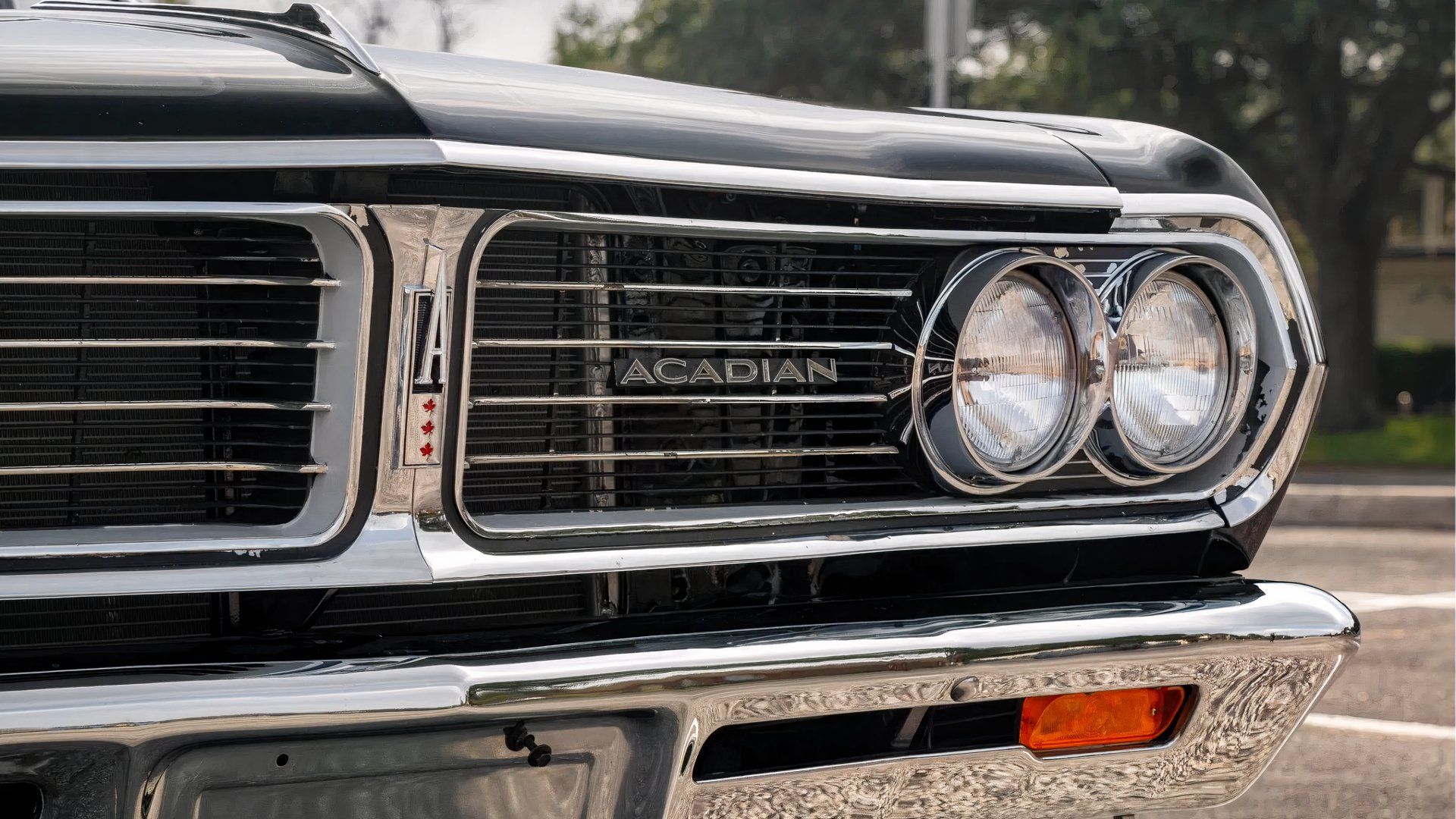
Every muscle car story seems to start in the United States. Big block V8s, winding back roads, and a sense of American pride. But one of the wildest muscle cars from the golden era never crossed the border, never appeared in a US brochure, and still hasn't shown up on any TikTok feed.
It wasn't hiding by accident. A trade law forced it into existence for a country most muscle car fans never think about. Then another trade law killed it just four years later. Most Americans never even knew it existed.
Before 1965, getting a car across the Canadian border wasn't simple. Tariffs and content rules meant American automakers had to build vehicles in Canada rather than ship them in. The Big Three all found ways around it. Ford ran Meteor up north. GM had McLaughlin-Buick. Dodge trucks wore Fargo badges.
These weren't just stickers and nameplates. Some had completely different sheetmetal and running gear from their American counterparts, built specifically for a country that wouldn't accept Detroit's leftovers. 5% tariff on imported, fully assembled vehicles. To make any business sense, American brands needed high "Canadian Content Value" by using local factories, Canadian labor, and regional parts suppliers.
This legal barrier turned Canadian assembly plants like GM's Oshawa, Ontario, facility into fascinating labs of automotive adaptation, producing cars that looked like one brand but ran like another.
GM's answer was to stop exporting Chevys and Pontiacs and build something entirely new instead, something Canadian enough on paper to dodge the tariffs completely. That gamble produced the Beaumont Sport Deluxe, or simply the "SD" to Canadian enthusiasts. It broke cover in 1962 on a compact platform and spent the rest of the decade climbing the ladder, first into a mid-size performance line, then into one of the rarest muscle cars Canada ever got.
The 396 cubic-inch Mark IV big block was branded Econo-Jet on Canadian build sheets, the same physical block Chevrolet called Turbo-Jet back home. Standard output was 325 horsepower, with an optional 350 horsepower version. Nearly everything mechanical came straight off the Chevelle SS, the chassis, the big block, most of the running gear.
The differences were all cosmetic, but they were real. A bespoke grille, unique tail lamp lenses, wheel cover emblems almost nobody south of the border ever laid eyes on. Even the interior skipped its Chevrolet roots and borrowed from Pontiac's playbook instead.
The whole point of the car was dodging taxes and import charges. Once the two countries sorted out free trade with the Auto Pact in 1965, that job was finished, and so was the car. It lasted four years before GM pulled the plug in 1969. GM Canada never published an official production total, so every number floating around is an estimate.
The one figure that traces back to an actual source is 1968, 767 hardtops, according to GM Canada's own Vintage Vehicle Services invoice records. Everything else is murkier. 1967 production is commonly cited at 451, though that number traces to dealer and enthusiast records rather than an audited GM count.
Hardest of all to find are the early execution models, only 41 units of the 1966 SD 396 were built with a four-speed manual transmission. Beaumont specialists generally place total SD-396 production for the entire run under 2,000 units, but nobody has ever confirmed an exact number.
A car built to dodge a tax problem outlived the tax problem by decades and spent nearly all of that time in near-total obscurity south of the border.
Source: HotCars
Plain-English guides to common problems and what they cost in Boca Raton, plus local shops.