The $70K Mitsubishi Halo Car That Out-Specced the Supra but Lost Anyway
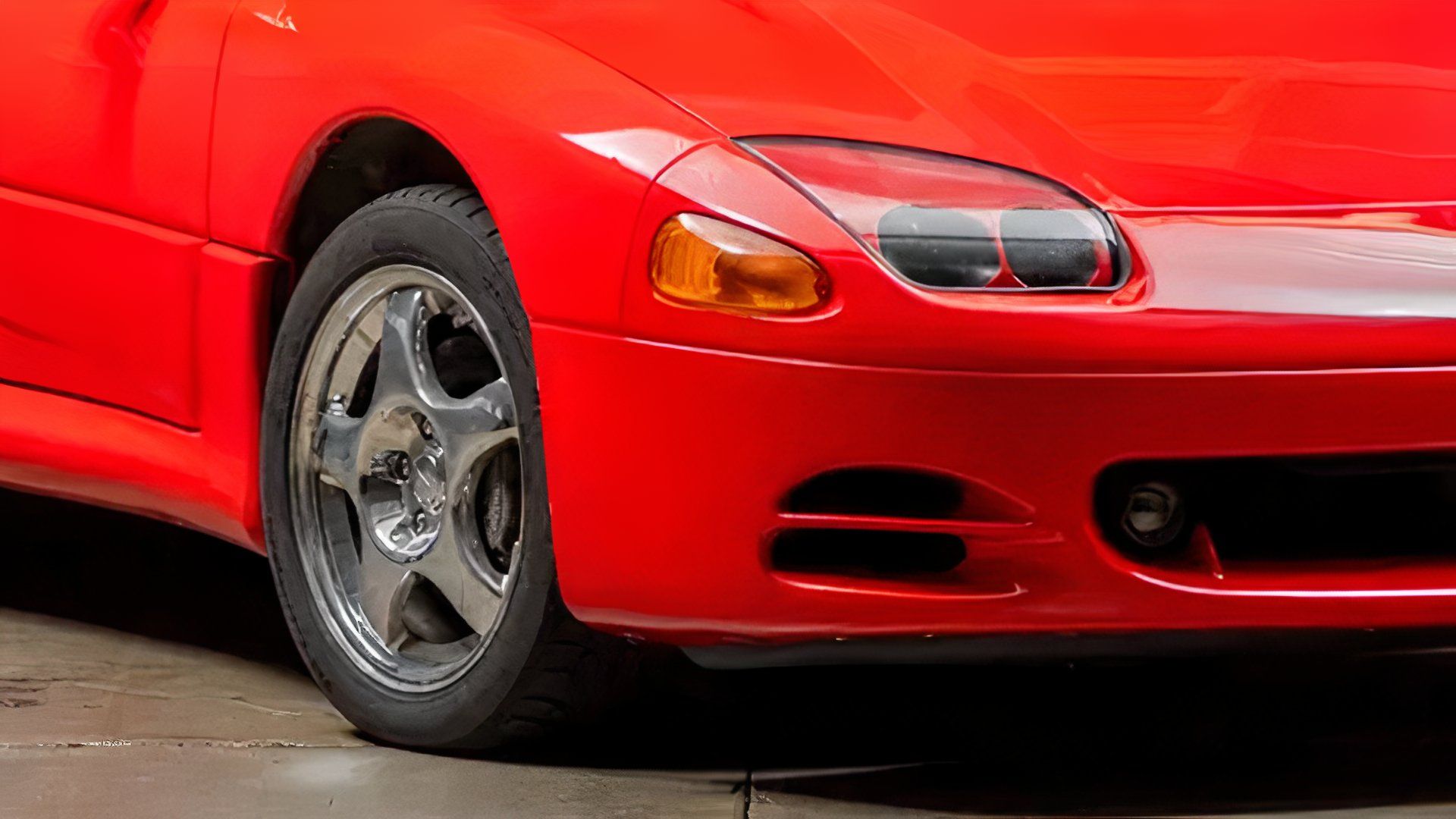
In the 1990s, Japanese automakers treated their flagships like engineering contests. Mitsubishi took that idea to an extreme with a grand tourer that packed twin turbos, all-wheel drive, a six-speed manual, four-wheel steering, and a powered metal roof that folded into the trunk.
It cost close to $70,000, carried an enormous amount of hardware, and still ended up slower than the coupe it was based on. Three decades later, that failure makes the experiment harder to ignore.
Japan's performance boom in the '90s wasn't just about horsepower. S. trim, with a six-speed manual and rear-wheel drive. Its strong iron-block six and roomy engine bay made it a favorite for tuners. Mazda's RX-7 took a different route: a compact twin-turbo rotary engine in a chassis weighing around 2,800 pounds.
It delivered performance through low mass and quick responses. Mitsubishi attacked physics with hardware: twin turbos, all-wheel drive, four-wheel steering, and electronic chassis systems.
Mitsubishi then added a retractable hardtop. It turned to American Sunroof Corporation (ASC) in California. Workers cut away parts of the shell, reinforced the rockers and windshield structure, and added support around the rear. 5 hours per car and added roughly 342 pounds, including a 98-pound folding steel roof and the motors, hydraulics, and wiring to operate it.
The roof sequence took about 35 seconds, involving four electric motors, four hydraulic actuators, and a dedicated computer.
The result was the 1996 Mitsubishi 3000GT VR-4 Spyder. 0-liter V6 made 320 horsepower and 315 lb-ft of torque. It came with all-wheel drive, four-wheel steering, and a six-speed manual. Production was tiny: just 1,034 Spyders across 1995 and 1996, with only 604 being VR-4s. The base price was $64,449, and a fully loaded example could reach $68,766.
For context, a 1994 coupe was about $42,253. 8 seconds for the quickest tested coupe.
Sales were slow. Mitsubishi offered dealers floorplan assistance in early 1996 as Spyders sat on lots. Dealers sold 232 in 1995 and just 56 more in the first two months of 1996. One dealer claimed the company charged stores $2,500 when they refused a Spyder allocation.
The Spyder's complexity also locked out tuners. The Supra's engine encouraged upgrades, and the RX-7 had a light, rear-wheel-drive platform with a clear identity. The Mitsubishi's engine bay was crowded with twin turbos, AWD hardware, and four-wheel steering. The Spyder added roof motors, hydraulics, and bracing.
Curb weight was roughly 4,123 pounds, more than 1,300 pounds above the RX-7.
Now, the Spyder's weaknesses create a different appeal. Poor sales made it rare, and the factory hardware remains the main event. Only 84 VR-4 Spyders were built for 1996. The car cost too much and weighed too much, but it stands as evidence of a moment when an automaker believed technology could solve any problem, even problems created by adding more technology.
Sometimes losing produces the better story.
Source: HotCars
Plain-English guides to common problems and what they cost in Boca Raton, plus local shops.