The 60-Year-Old Engine Design Still Dominating Drag Racing Today
Today's top fuel dragsters produce more than 11,000 horsepower from a supercharged V8, launching from 0 to 60 mph in as little as half a second. These machines represent the peak of internal-combustion performance, yet their core architecture dates back six decades to a design born during Detroit's 'win on Sunday, sell on Monday' era.
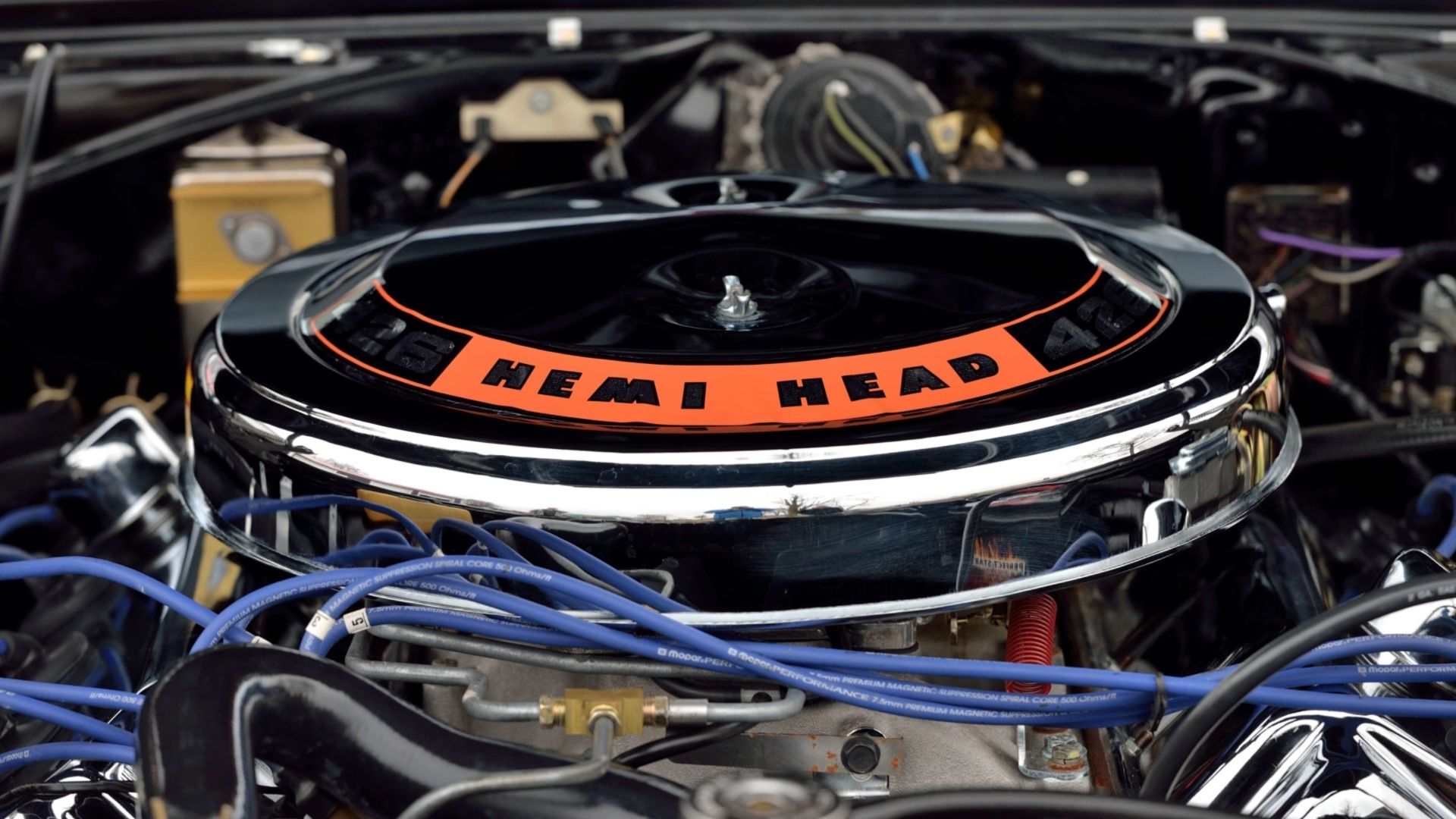
In the early 1960s, American racing was booming, and Chrysler recognized a threat from rivals like Ford and Pontiac. In December 1962, engine design manager Willem "Bill" Weertman assembled a team to build a race-winning 426 cubic-inch V8 before the 1964 Daytona 500. Tom Hoover, known for the Ramchargers program, proposed combining the rugged deep-skirt block of the Max Wedge with the superior airflow of the FirePower's hemispherical heads.
That idea became the 426 Hemi.
The engine debuted at the 1964 Daytona 500, where Hemi-powered Plymouths and Dodges dominated, with Richard Petty leading 184 of 200 laps and lapping the field. Hemi cars captured 26 NASCAR victories that season. Rivals complained it wasn't a production engine, leading NASCAR to ban it for 1965.
Chrysler responded by putting the 426 Hemi into production cars for 1966, creating some of the most collectible American performance vehicles ever built.
The Hemi's hemispherical combustion chambers allowed for large valves and excellent airflow, while its reinforced block and forged internals handled extreme stress. Race versions produced over 550 horsepower, though street versions were rated at 425. Chrysler stopped production of the 426 Hemi in 1971 due to emissions regulations and market shifts, but racers never abandoned it.
Don "Big Daddy" Garlits discovered the Hemi's potential on nitromethane, pushing it beyond its limits and finding it survived and thrived. His success forced competitors to abandon Ford and Chevrolet alternatives. Today, every NHRA Top Fuel dragster uses an engine architecture derived from the 426 Hemi, with a 500-cubic-inch supercharged V8 producing around 11,000 horsepower.
Modern engines retain the 90-degree V8 layout, hemispherical combustion chambers, and pushrod valvetrain, though they use billet aluminum blocks and a 14-71 Roots-style blower. These engines are rebuilt after every run. Six decades later, engineers have not found a better blueprint for this level of performance.
Source: HotCars
Plain-English guides to common problems and what they cost in Boca Raton, plus local shops.