NYC Tunnel Police Once Used Tiny Electric Rail Cars on a Hidden Catwalk
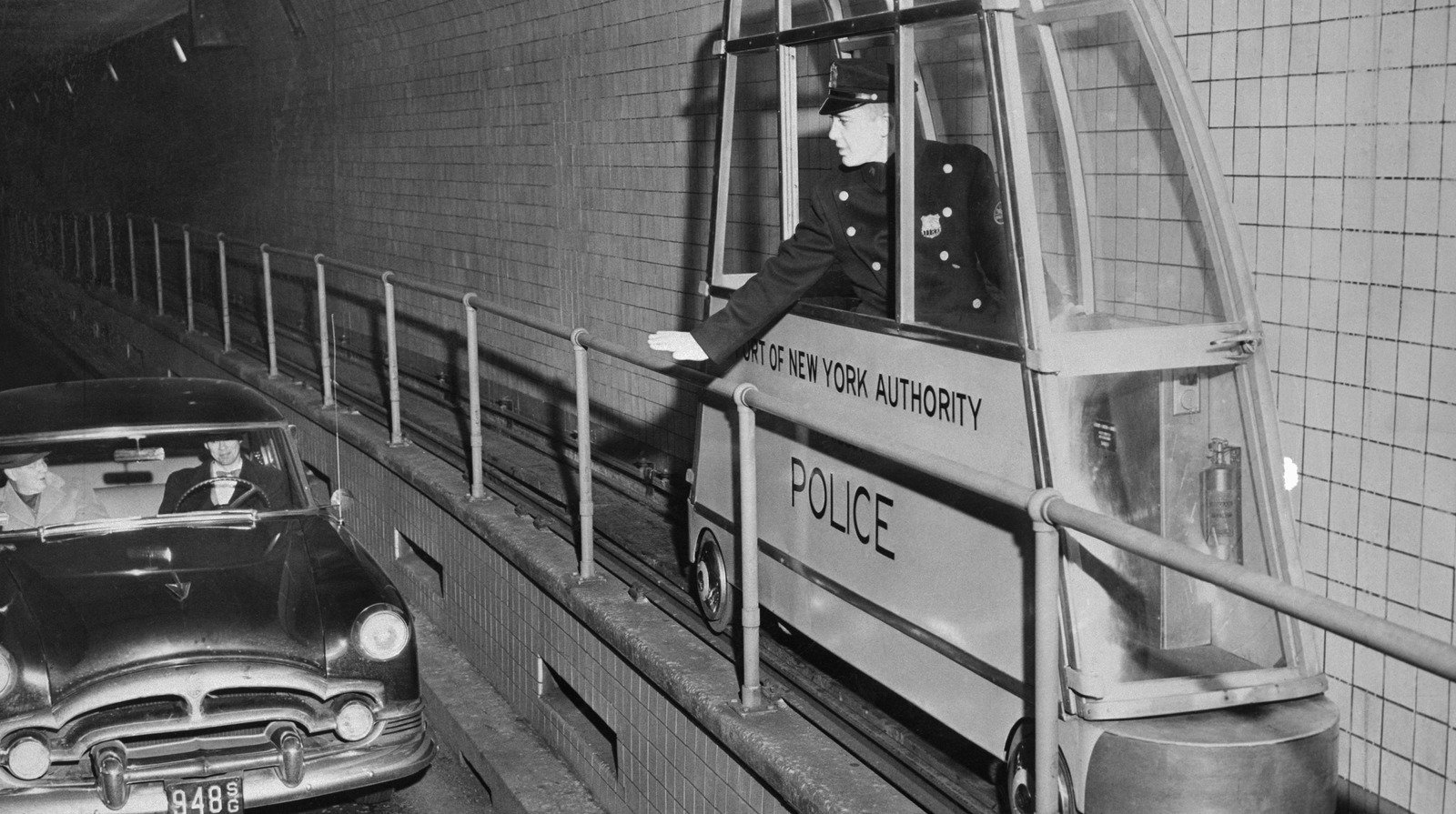
Before modern patrol methods, police in New York City used remarkably narrow electric vehicles to monitor traffic inside the Holland Tunnel. The tunnel, connecting lower Manhattan and Jersey City, was not originally built with a train track. That track was added in 1954, running along a thin elevated catwalk just above the traffic lanes.
The single-seat electric car was only 2 feet wide, weighed 1,300 pounds, and had a three-horsepower motor with a top speed of 12 mph.
Because the car could not turn around at the end of the line, the driver's seat swiveled so the officer could face the opposite direction and ride back. According to Popular Mechanics at the time, this system allowed four officers to patrol the entire tunnel instead of six. The Lincoln Tunnel got its own version in 1960, but those were gas-powered, open-top, and could reach 35 mph.
They were made of steel and aluminum, while the Holland cars could carry up to three officers in an emergency. The Lincoln versions were strictly solo.
The catwalk cars stayed in service until 2011, according to the New York Times. Ventilation in the Holland Tunnel was handled by four large buildings housing 84 fans that exchanged the air every 90 seconds, a system later used in the Lincoln Tunnel. The Holland Tunnel is named after its first chief engineer, Clifford M.
Holland, who died before completion. His successor, Milton Freeman, also died less than a year later. A third engineer, Ole Singstad, finished the project and later designed the Lincoln Tunnel.
Before the tunnel opened to cars, thousands of pedestrians walked through it during its inauguration. At midnight on November 13, 1927, traffic began, and tolls for driving into Manhattan soon became a lasting tradition.
Source: Jalopnik
Plain-English guides to common problems and what they cost in Boca Raton, plus local shops.