How the Ford GT’s Twin-Turbo V6 Rewrote the Rules of American Muscle
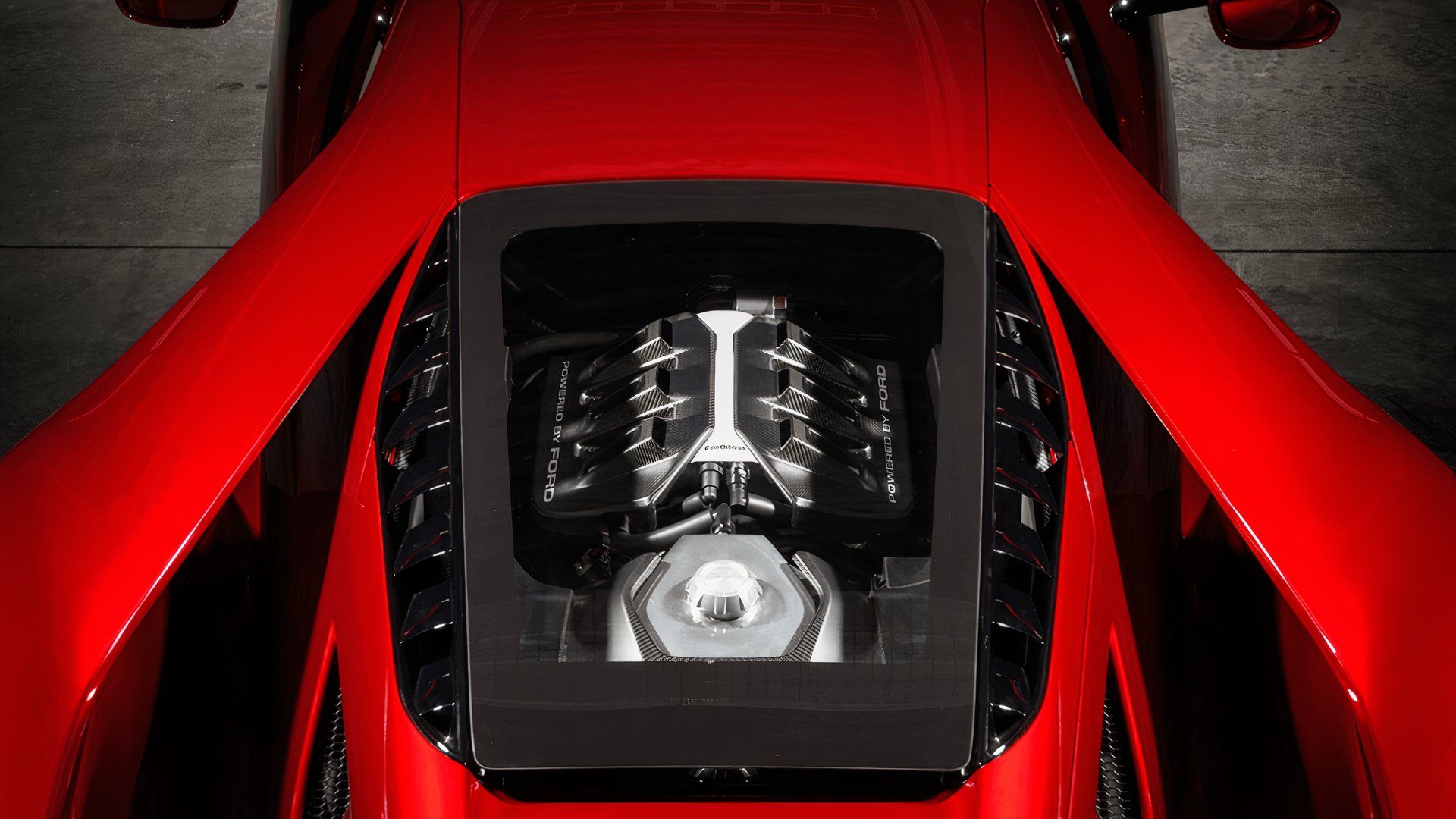
Bob Dylan’s 1964 hit “The Times They Are a-Changin’” might as well be the anthem for modern performance cars. Back then, the Pontiac GTO kicked off the muscle car era, cementing the V8 as the backbone of American speed for decades. But one model dared to break that mold: the second-generation Ford GT, which swapped the traditional eight-cylinder for a twin-turbo V6.
4-liter supercharged V8 with a six-speed manual. A decade later. 5-liter twin-turbo V6, producing over 600 horsepower and 550 lb-ft of torque, paired with a seven-speed dual-clutch gearbox. The switch wasn’t just for shock value, it helped with packaging and aerodynamics. The narrower engine allowed a teardrop shape with distinctive “flying buttress” pillars that channeled air over the rear spoiler, while an intake fed the turbo intercoolers before exhausting through the center of the taillights.
The move also promoted Ford’s EcoBoost tech, then new to the Mustang, and showed that an American supercar could be blisteringly fast without eight cylinders. 6-second quarter mile. 7 quarter mile), despite the Ford having half the cylinders.
Buyers didn’t care about the cylinder count. 5 million in 2019, three times its original sticker. In 2018, Canada’s Multimatic was asked to build 350 extra units beyond the planned 1,000. In 2023. Ford unveiled the track-only GT Mk IV with 800 hp, limited to 67 hand-built cars. Today, a 2017 GT runs about $788,000 per Hagerty’s valuation, well above its $478,750 base price.
A new GT is rumored, but Ford hasn’t confirmed anything. Either way, the V8’s monopoly on American performance is officially over.
Source: HotCars
Plain-English guides to common problems and what they cost in Boca Raton, plus local shops.