How GM’s 455 V8s Went From Muscle Heroes to Neutered Giants
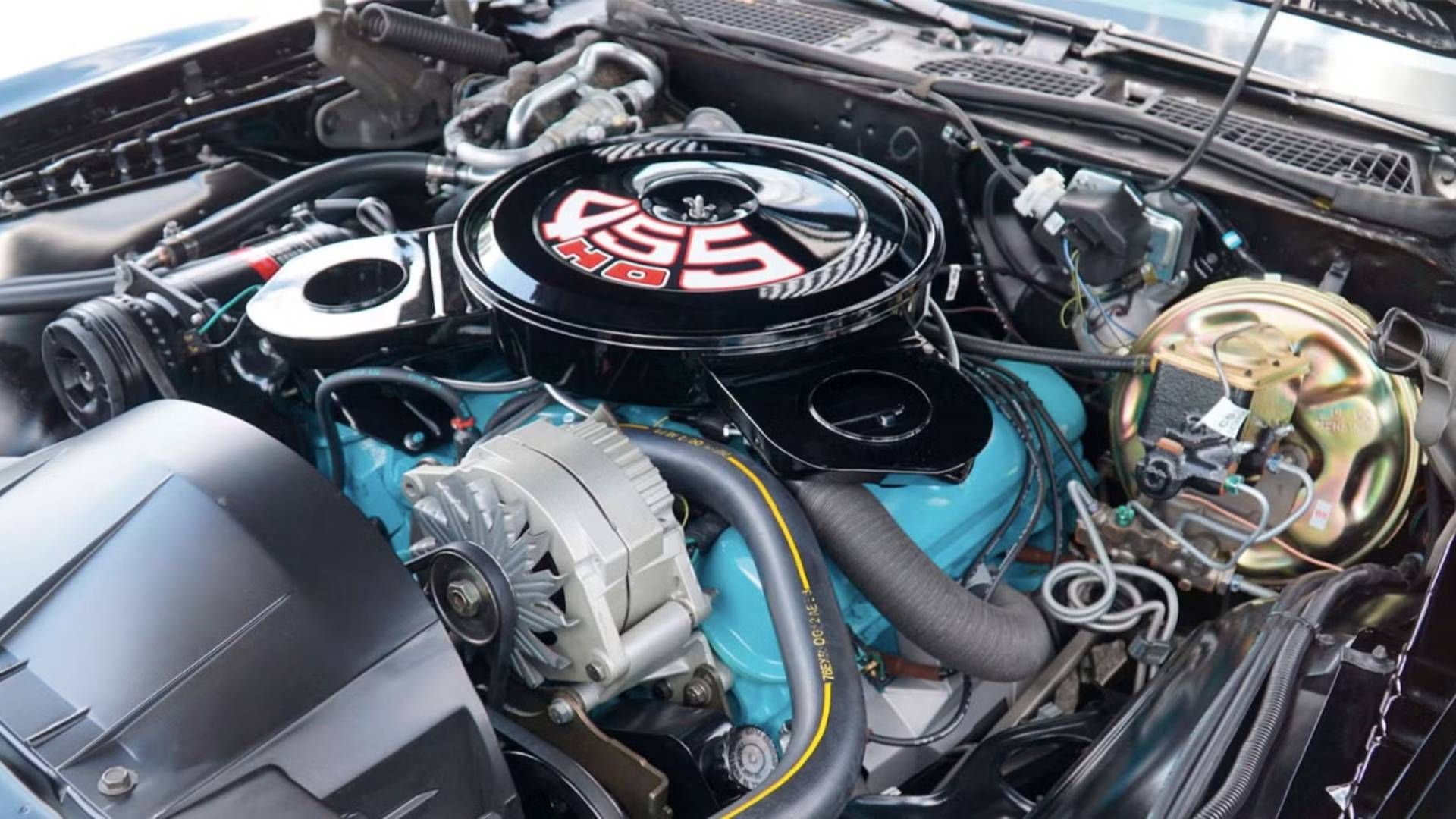
The late 1960s and early 1970s were a wild time for American automakers, with muscle car wars raging and even non-performance models offering massive V8s. But that golden era didn’t end simply because of the oil crisis, the timeline was more complicated.
In 1970, GM barred its A-platform intermediates (Chevy, Pontiac, Oldsmobile, Buick) from using engines larger than 400 cubic inches. Officially, this was about safety and corporate responsibility, but insiders suspected it was a legal shield, since GM sold nearly half of all cars in the late ’60s and feared federal crackdowns.
That cap left GM without a direct answer to Ford and Chrysler’s bigger mid-size engines.
By 1970, GM lifted the limit, and Pontiac, Buick, and Oldsmobile quickly developed 455-cubic-inch V8s. Oldsmobile was first with the 1970 4-4-2, offering 370 hp and 500 lb-ft of torque. Buick’s 455 followed with 350 hp and 510 lb-ft, and Pontiac’s version, used in the Grand Prix, Firebird Trans Am, and GTO, came in at 335 hp and 480 lb-ft.
All three were close in performance, initially.
But the detuning began almost immediately. 5:1 across the board. That cost the 455s between 50 and 70 horsepower. Worse, GM offered two-barrel carburetor versions, marketed as smoother and more subdued. In reality, these choked the big engines, top-end power vanished above 3,500 RPM.
Pontiac’s two-barrel 455 fell to 280 gross hp, Buick’s base version hit 315 hp, and Oldsmobile’s two-barrel made around 310-320 hp on paper, but felt far weaker.
The oil crisis didn’t hit until 1973, and by then, GM’s 455s were already struggling. Japanese imports were arriving, and a big, neutered V8 made little sense. By 1976, the 455s were gone, and GM consolidated around Chevrolet’s 350 small block. That move marked the end of the first great muscle car era.
Source: HotCars
Plain-English guides to common problems and what they cost in Boca Raton, plus local shops.