Honda Passport vs Pilot: The Real Difference Comes Down to Seats
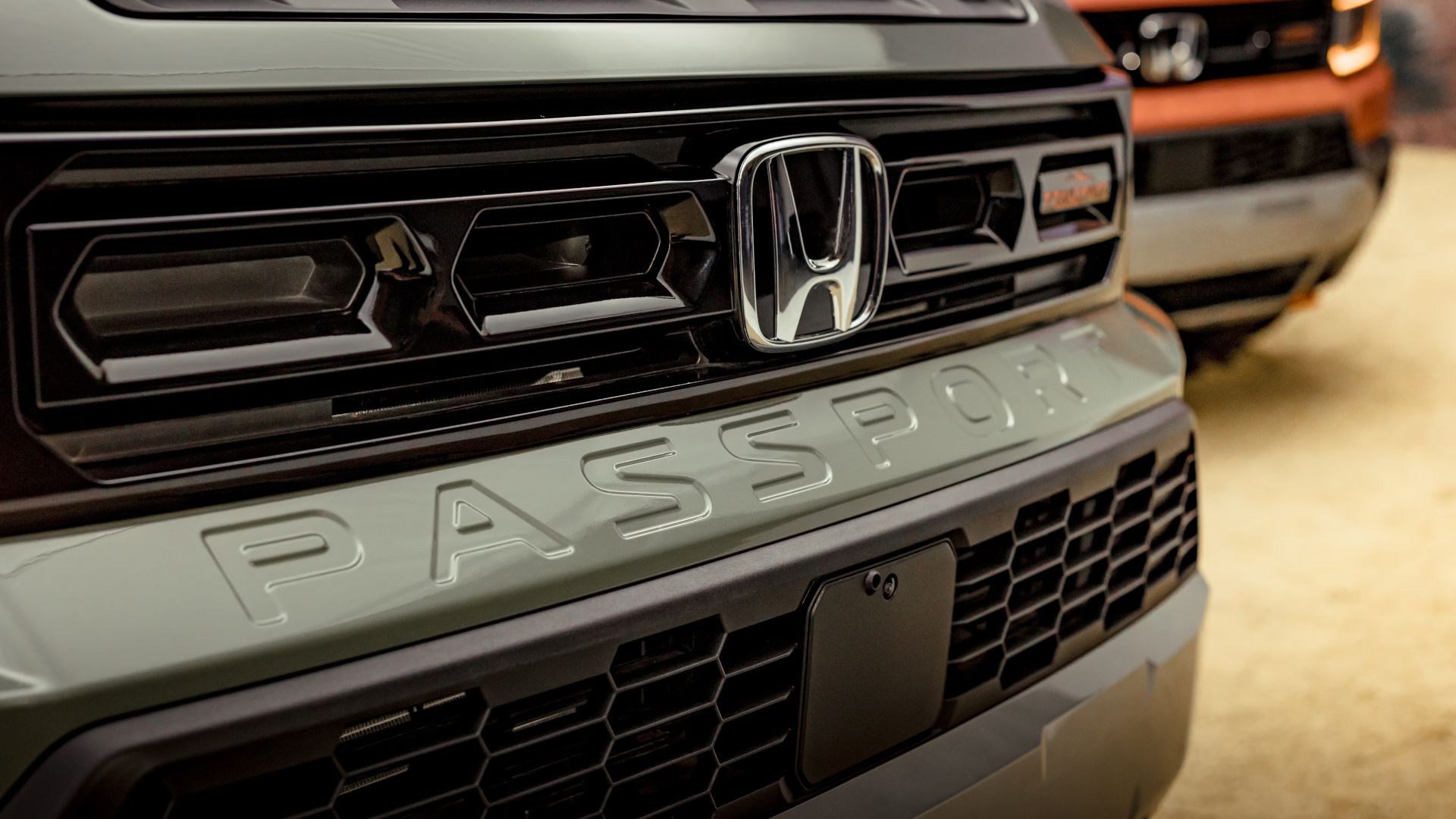
Honda's two midsize SUVs share the same 3.5-liter V6, the same 10-speed automatic, and similar price tags. But when comparing the Passport and Pilot for 2026, the biggest difference isn't under the hood, it's how many people you need to carry.
The Pilot is the three-row family hauler, seating up to eight, or seven with captain's chairs. The Passport is a two-row, five-seat adventure-minded SUV. That explains the size difference: the Pilot stretches past 200 inches long, while the Passport is shorter but wider and taller, with better ground clearance and more favorable approach and departure angles for off-road use.
Under the sheet metal, both use Honda's 3.5-liter V6 with 285 horsepower and 262 lb-ft of torque. Every Passport comes with all-wheel drive, while the Pilot is front-drive on base trims and offers AWD on upper models. The Passport and AWD Pilot can tow up to 5,000 pounds; front-drive Pilots top out at 3,500.
Cargo space favors the Pilot when all seats are down: 87 cubic feet versus 83.8 for the Passport. But with the third row up, the Pilot offers just 18.6 cubic feet. The Passport's 44 cubic feet behind the second row is more usable for everyday hauling.
The price gap is around $2,500 at the entry point: the Pilot starts at $42,395, while the Passport starts at $44,950. Both have seven trims, and the top Pilot is more expensive than the top Passport. Over five years, expected maintenance is nearly identical, about $2,548 for the Pilot and $2,519 for the Passport, and the Passport holds its value slightly better, retaining 55% versus 52% for the Pilot.
If you regularly carry a large family, the Pilot's third row and max cargo space make it the easy choice. If you want standard AWD, a little more off-road ability, and simpler two-row practicality, the Passport is the one to buy.
Source: CarBuzz
Plain-English guides to common problems and what they cost in Boca Raton, plus local shops.